
MOBILE DESIGN
0→1 PROJECT
B2C
✦ Making affordable food easier to find for students.
A student-first food discovery app that helps students find affordable meals. Built customizable profiles and an intuitive contribution flow while designing a distinct visual identity.
Jump to solution
ROLE
Product designer
TOOLS
Figma
Adobe Illustrator
Notion
TIMELINE
Oct - Dec 2025
(8 weeks)
TEAM
1 PM
1 project lead
3 product designers
4 frontend devs
5 backend devs
Overview
Between classes, clubs, and work, students often don't have time to search across multiple platforms or flyers just to find affordable food.
Existing resources are scattered, quickly become outdated, and aren't personalized to individual needs.
Bruin Bites creates one place where students could discover reliable, budget-friendly dining options around UCLA.
SNEAK PEEK
Discover affordable dining options around campus
As a product designer working with 2 other designers, I owned the contribution pages and design system, created a customizable profile, and designed a distinct brand identity.


USER RESEARCH
Understanding student food habits
Before designing, our team wanted to understand how students currently found affordable meals, what discouraged them from contributing deals, and which features would provide the most value.
We surveyed 62 UCLA students, and found that:
Design response: Map-first browsing experience.
Design response: Quick submission flow with minimal required information.
Design response: Make the recipe hub a secondary feature.
PROBLEM
How might we help UCLA students quickly discover trustworthy, affordable food options while encouraging community contributions?
There’s no single, cohesive platform for students to find deals and discounts specific to them, which contributes to the struggle of an already busy college schedule.
AFFINITY MAPPING
Transforming research into design
After synthesizing our research, we prioritized features that directly addressed the biggest pain points instead of trying to build everything at once.
Filter system that accounts for price, diet, distance, or deal type.
Deal map with expanded card views and navigation options.
Deal display that shows labels, reviews, and countdown timers.
Contribution features that focus on engagement.
USER FLOW
My focus: profile and contribution
I owned the profile experience and contribution flow. I considered what features a student would want to edit within their profile, and what kind of interactions would make contributing feel intuitive and rewarding.
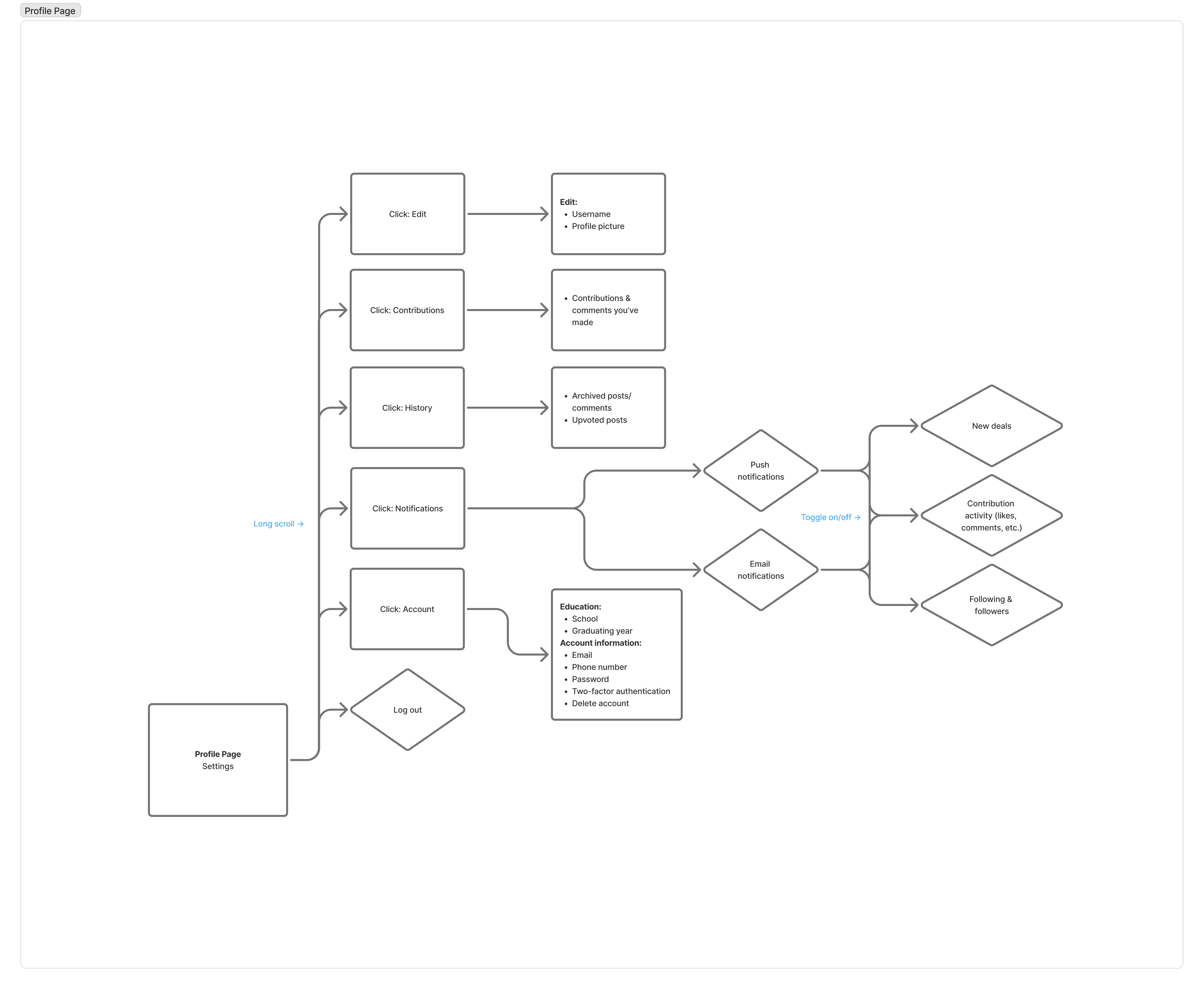
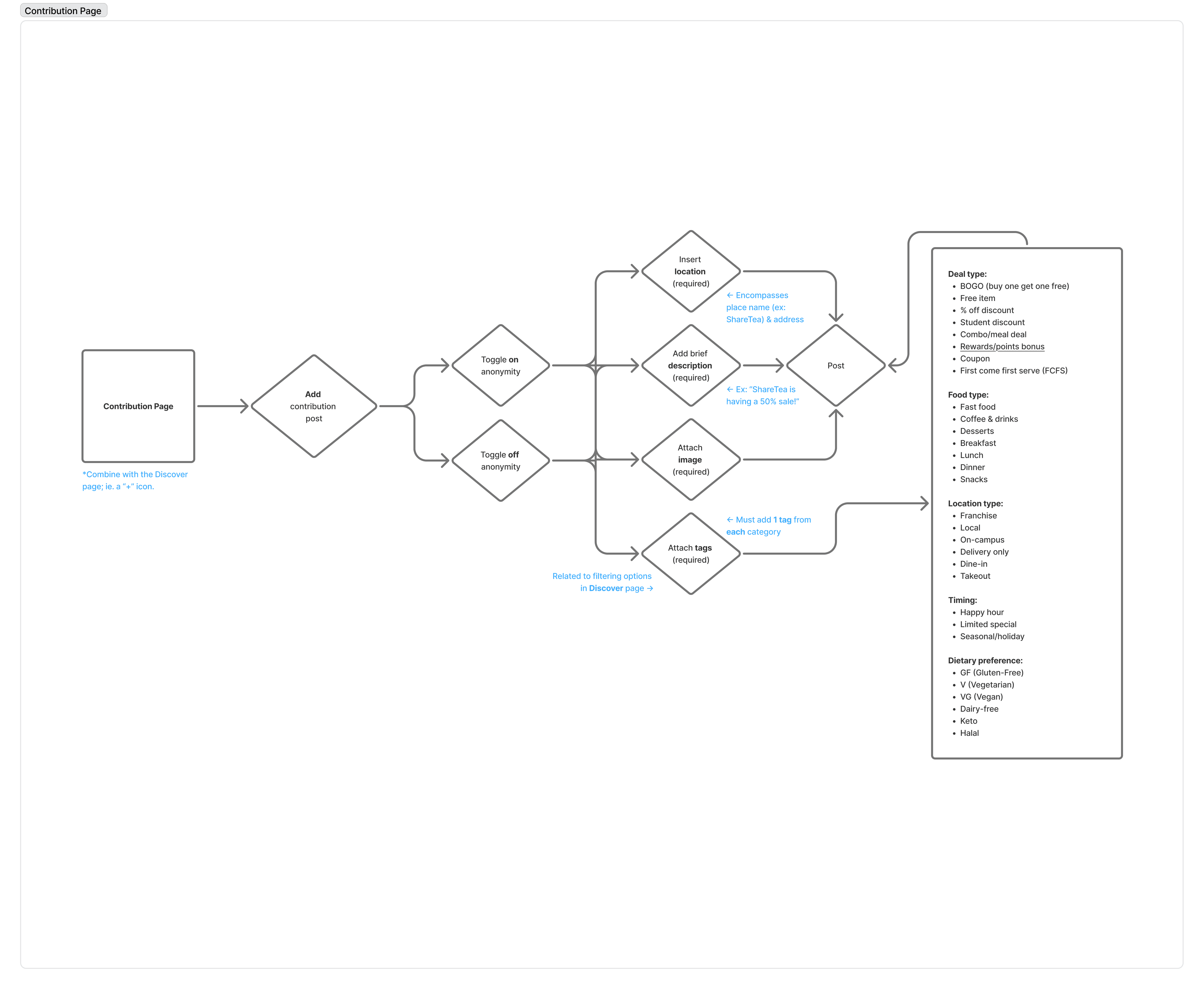
Profile page and contribution page flows.
LOW-FI PROTOTYPING
Refining the user experience
As the product evolved, I iterated on my designs based on team feedback and product needs. Each revision focused on making the contribution experience more seamless, flexible, and intuitive.
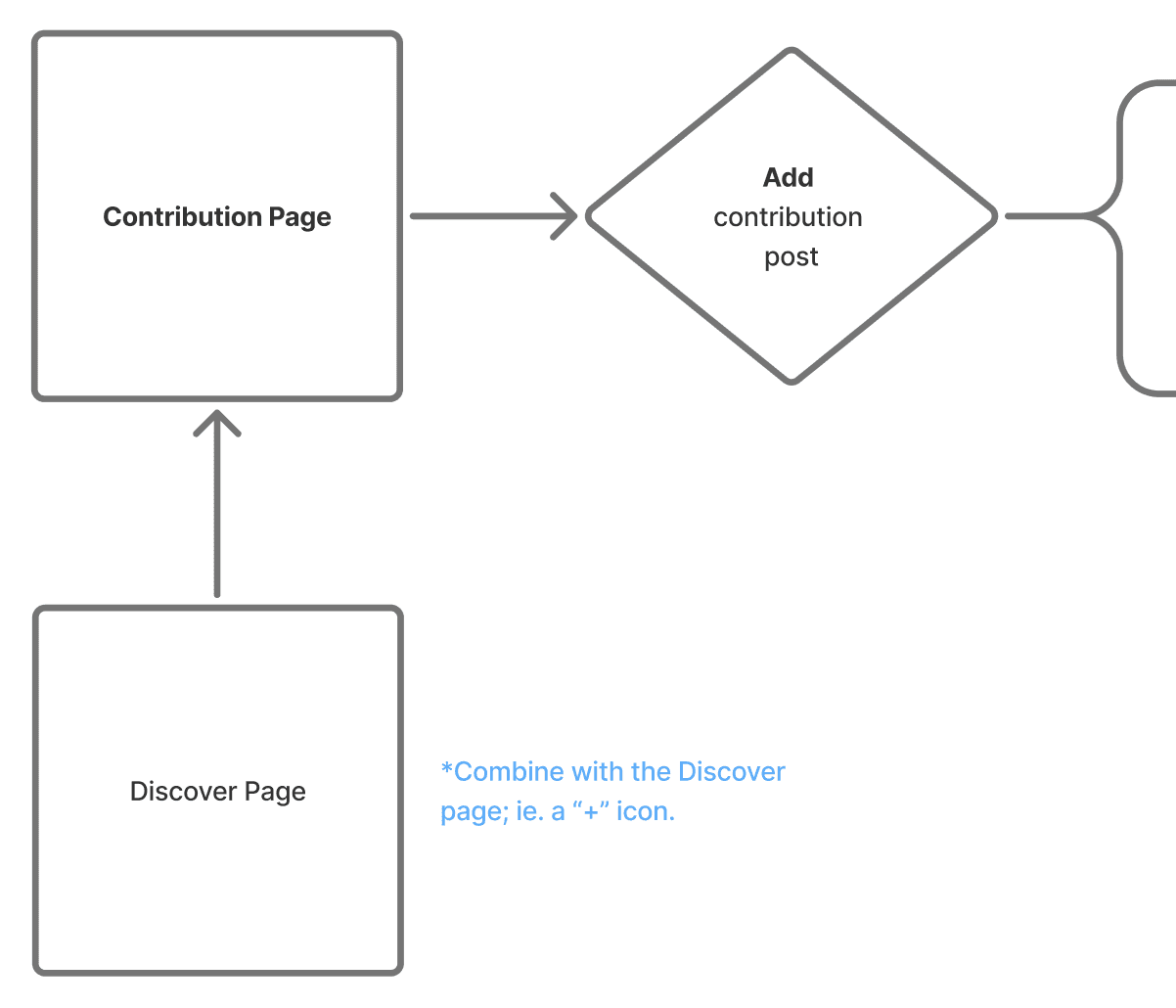
Iteration 1: Integrated contributions into discovery
To reduce friction, I moved the contribution flow directly into the Discover page.
This created a more natural experience by letting users share deals while they were already browsing.
Iteration 2: Enhanced contribution options
I added fields like date and time so users could provide more accurate, time-sensitive information.
This gave contributors greater flexibility while improving the quality of shared deals.
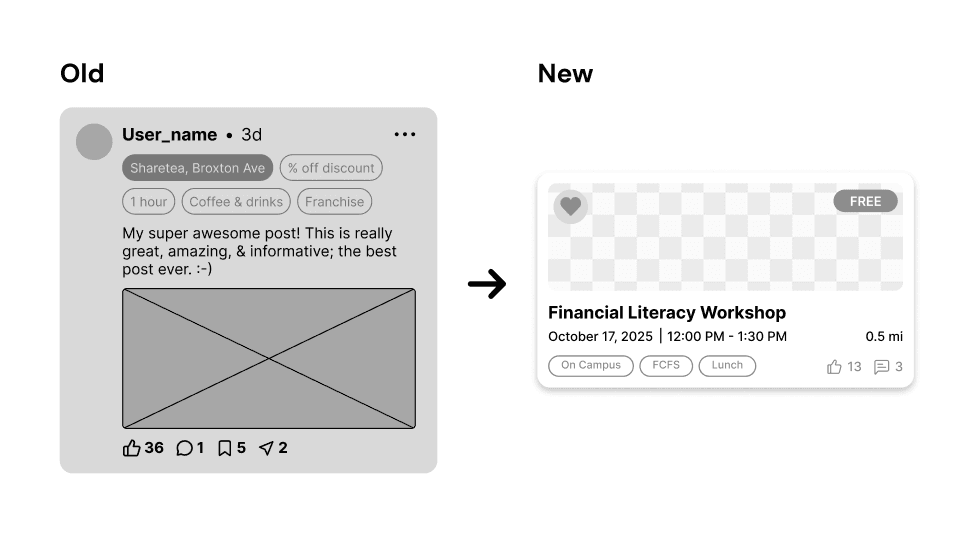
Iteration 3: Improved information hierarchy
I redesigned contribution cards to highlight the most important details first, making deals easier to scan and compare at a glance.
Finalization: Document for development
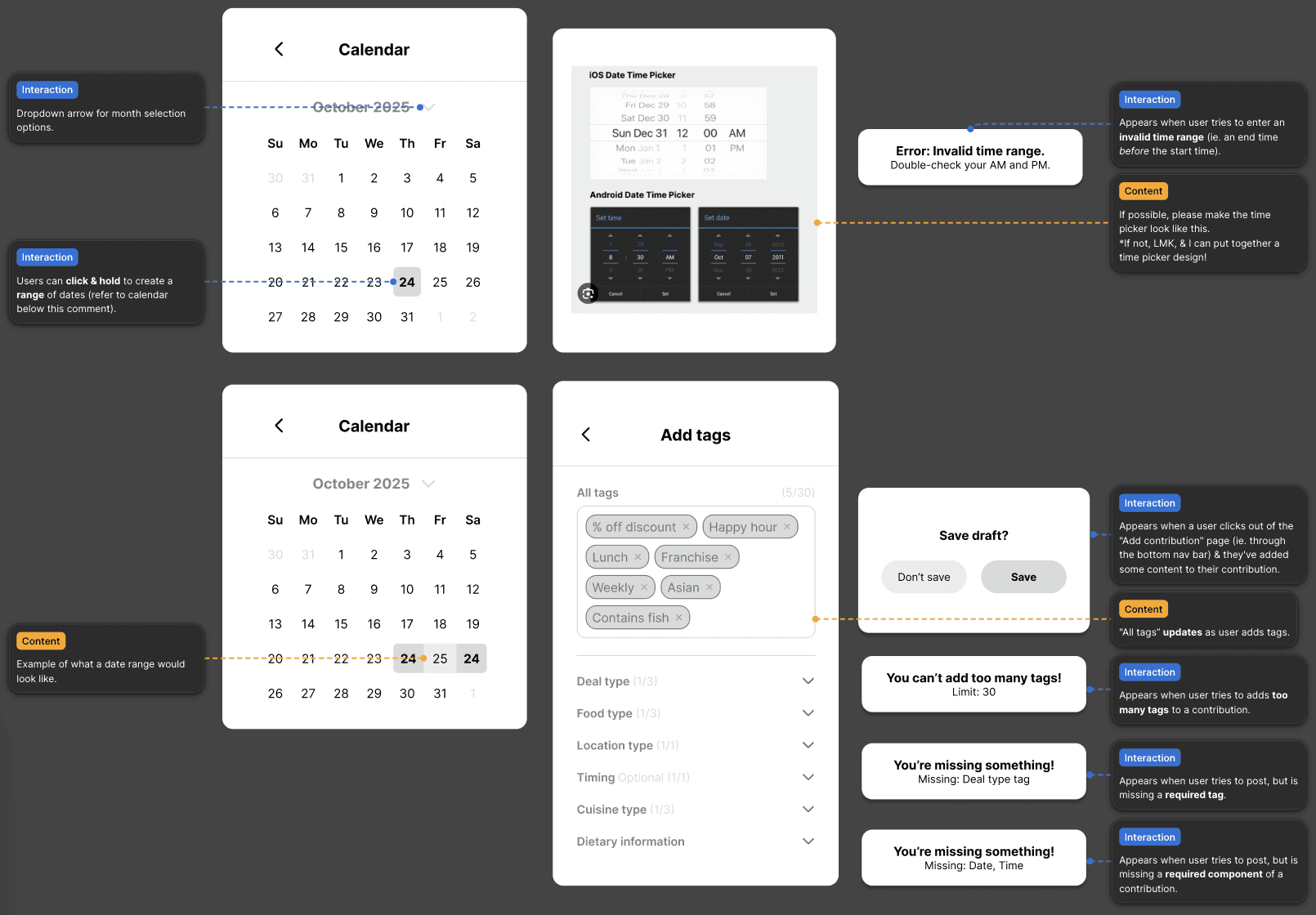
I created annotated designs to communicate interactions, edge cases, and component behavior, helping developers implement the experience accurately.
DESIGN PROCESS
Building a student-friendly brand
Because Bruin Bites targeted busy college students, we wanted the product to feel approachable rather than transactional.
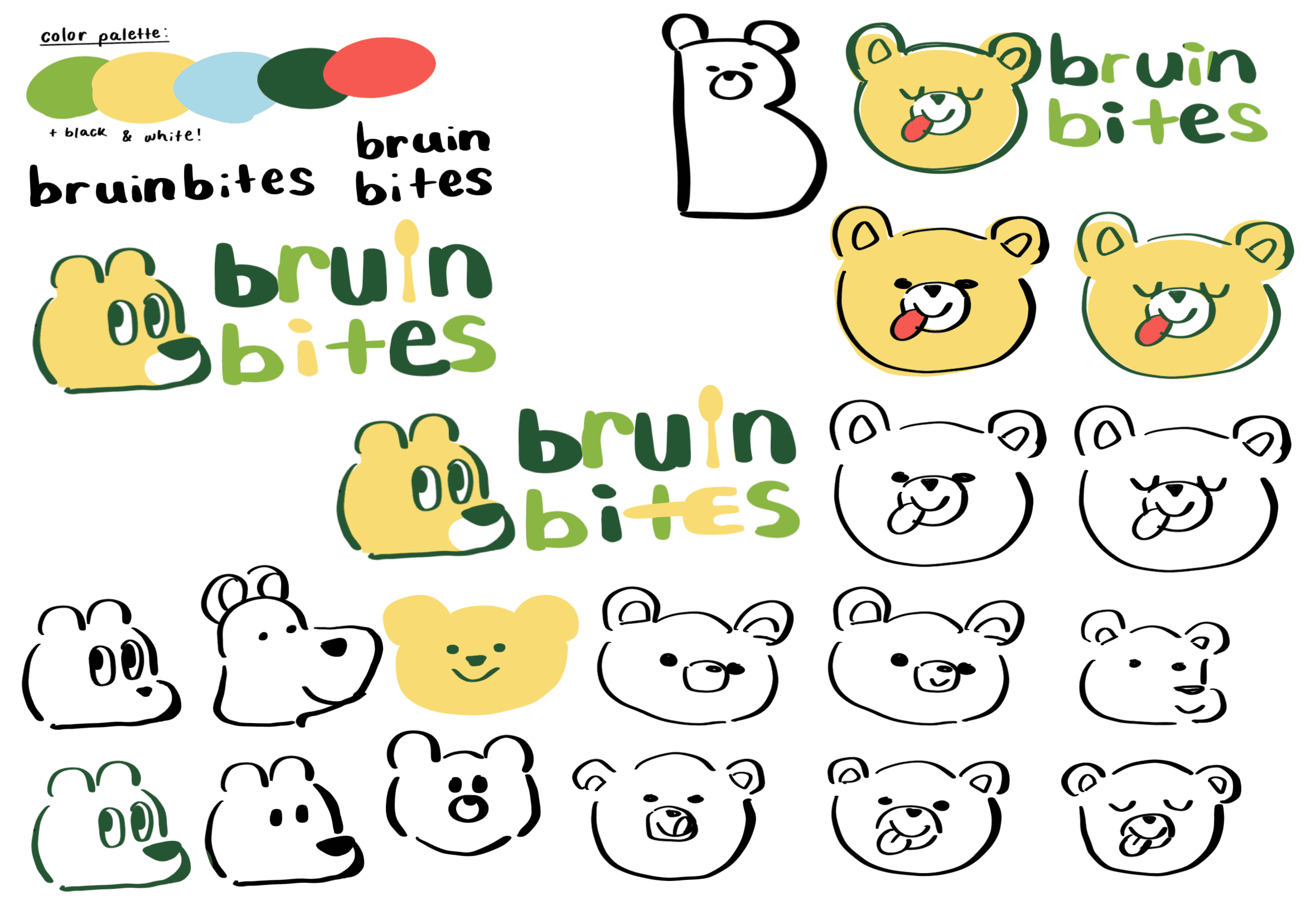
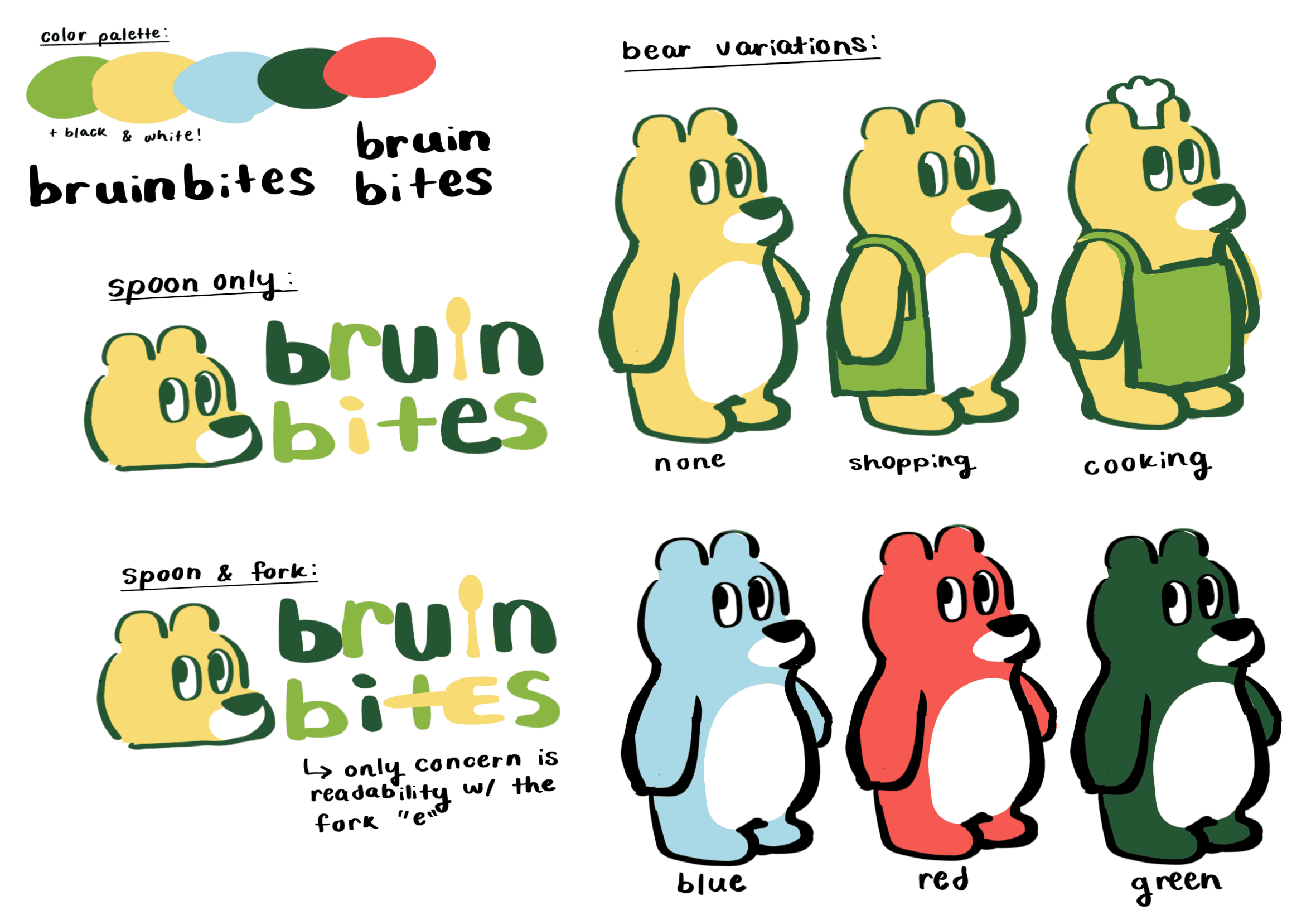
Bright pastels, playful illustrations, and a bear mascot helped reinforce the community-driven personality of the app.
FINAL SOLUTION
✦ Personalized profile
Users can easily adjust their profile to suit their preferences.
View personal contributions and comments.
Stay up-to-date with contributors they're following.
Personalize notifications and account settings.
View contribution history through archived and liked contributions or comments.
FINAL SOLUTION
✦ Intuitive contributions
When creating a contribution, users can easily add and adjust information with lists of customizable options.
FINAL SOLUTION
✦ A cohesive visual identity
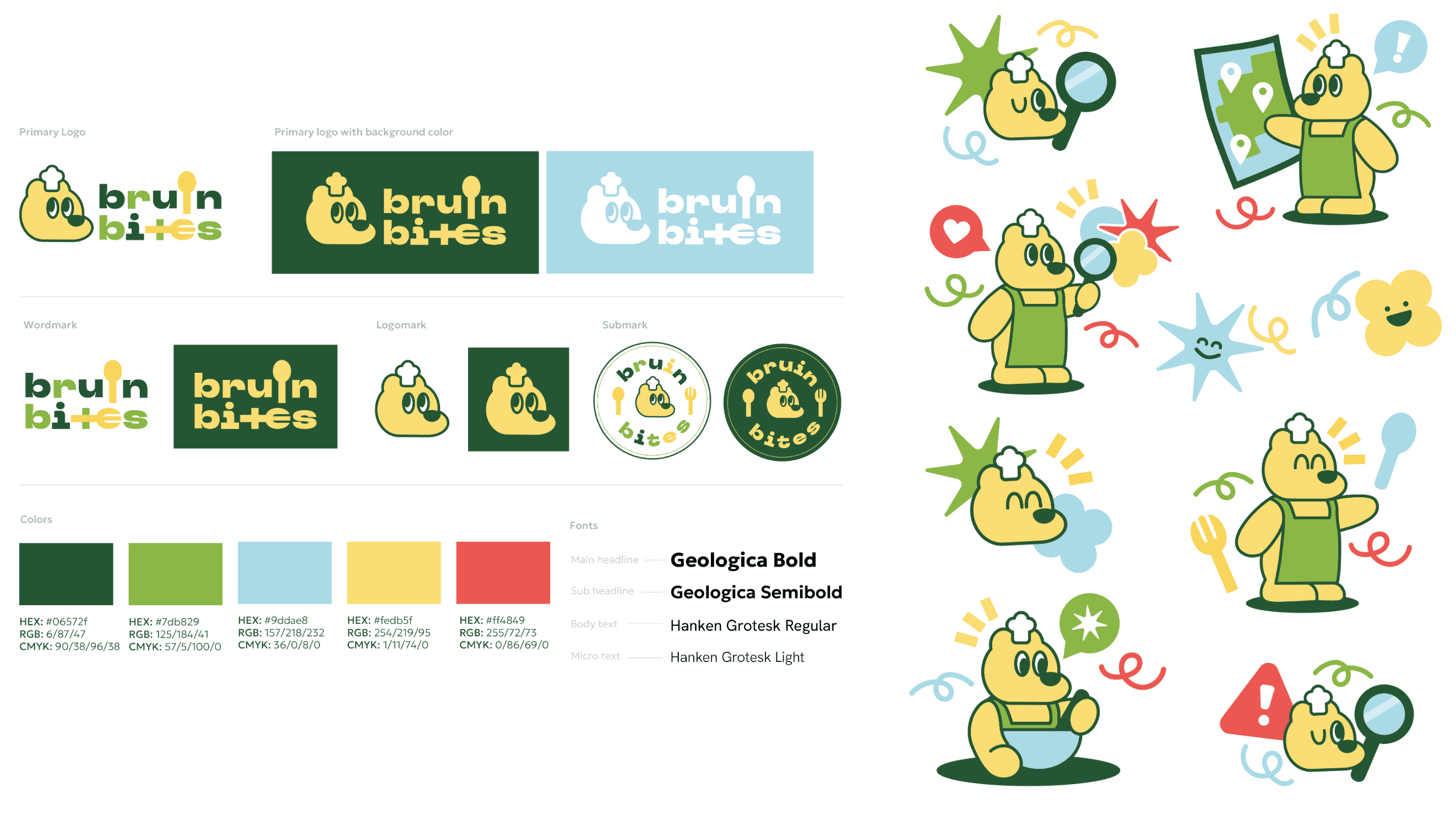
Bruin Bites' visual identity emphasizes lively pastels, accompanied by colorful graphics and a bear mascot to highlight the student-focused nature of the app.
IMPACT
The results of an 8-week project
Collected data from 64 user surveys
Developed 14 responsive, mobile pages
Created a 0 to 1 visual identity with 10+ digital assets
Contributed to a shippable design in less than 8 weeks
REFLECTION
What I learned
Through this project, I learned the importance of communication among designers, and the role that user needs play in ensuring that a design embodies a solution.

