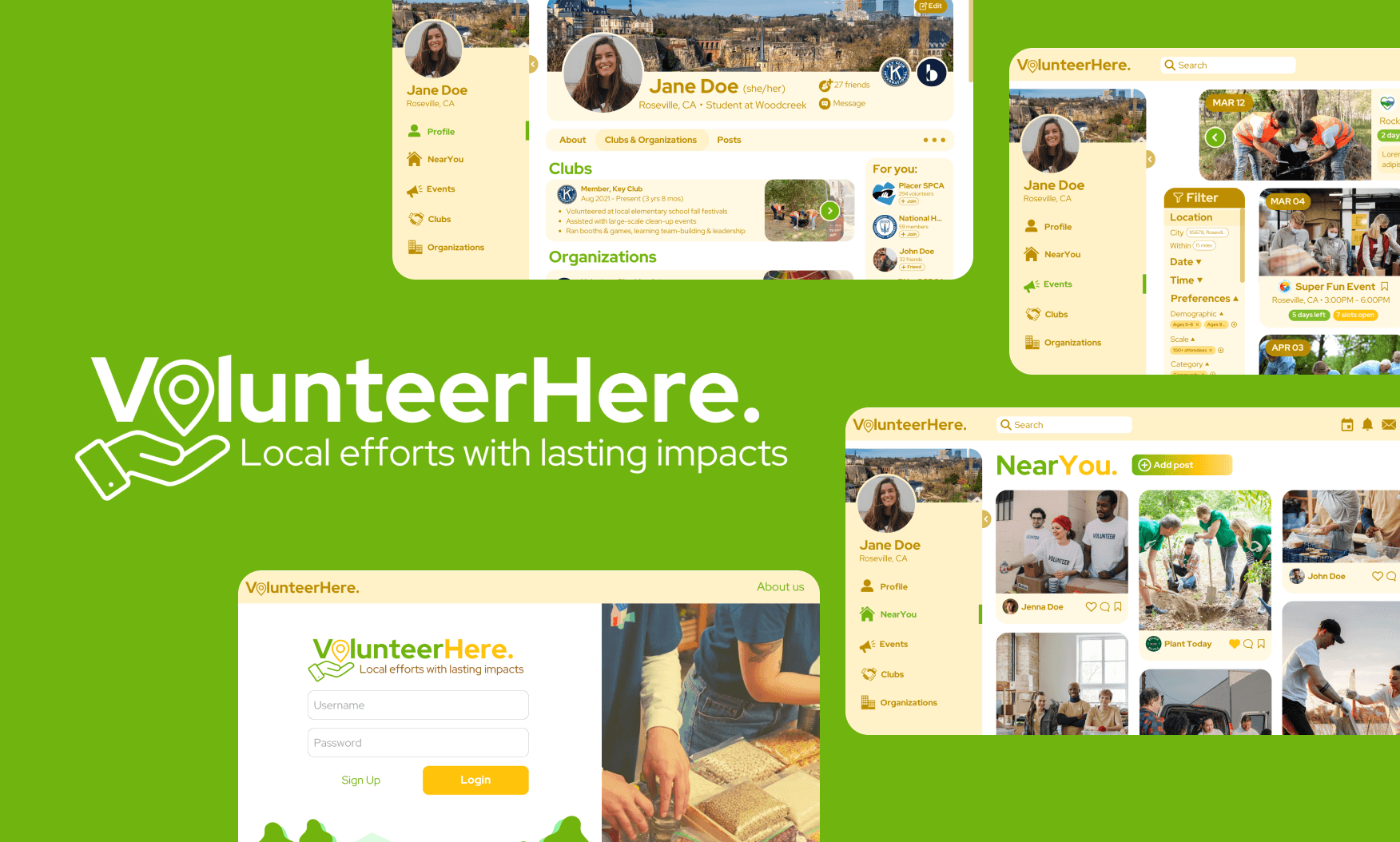
VolunteerHere
A centralized platform for volunteering that connects clubs, organizations, and volunteers, with an emphasis on community.
Overview
ROLE
UI/UX designer
TOOLS
Canva, Google Workspace
TIMELINE
January 2025 - April 2025
TEAM
2 designers
2 research & outreach
BACKGROUND
In the spring semester of my senior year in high school, I participated in the Roseville Rising Student Entrepreneurship (RRSE) Program. RRSE is a 14-week program for high school students, designed to foster innovative ideas and entrepreneurship experience.
Teams collaborate to identify a problem and design a potential solution, culminating into a 3-minute business pitch to a panel of judges at the end of the program.
PROBLEM
A lack of centralized communication for volunteering makes it difficult for clubs and organizations to connect with volunteers.
As a part of volunteering clubs with involvement on the board level, my team realized the struggle in finding volunteering opportunities and connecting with organizations.
It's difficult for volunteering clubs to find volunteering opportunities, and it’s also difficult for organizations to reach out and find said volunteering clubs. The problem goes both ways.
RESEARCH & DATA ANALYSIS
Survey data from 195 students and 10 organizations
We collected data from almost 200 high school students that volunteer, including 51 officers of volunteering clubs.
1. Volunteers' data:
Q: "Are there any struggles you've had with finding volunteering opportunties?"
User 1
"…some websites are unclear, and some non-profits forget to take old listings off the website when they're finished."
User 2
"I want to do some more volunteering…I'd like a more direct way to promote volunteering events."
User 3
"Yes, there have been some struggles finding places to volunteer outside of church."
Methods for finding volunteering
The top two methods in which students found volunteering opportunities:
55.4% School clubs.
57.4% Word-of-mouth.
The bottom two methods:
27.7% Social media.
25.1% Organization websites.
*The question allowed respondents to select multiple options, hence the double-counting.
Lack of digital presence
Most students get volunteering opportunities from their local community. Considering that the lower categories require more of an online presence, volunteering sources are missing out on the digital platform.
2. Volunteering clubs' data:
Q: "Are there any struggles you've had with finding volunteers or running your club?"
User 1
"When collaborating with volunteering opportunities, I try my best to have them respond, but doing so quickly is difficult."
User 2
"It's a matter of scheduling and dates that suit the members of the club. Some of them play sports and don't have time."
User 3
"In our club, we have had trouble finding volunteers to help at fundraising events and donators for spare soccer cleats."
Fragmented communication process
64.7% struggle to find volunteering opportunities for their club.
64.7% struggle to find volunteers.
*The question allowed respondents to select multiple options, hence the double-counting.
A two-sided struggle
This highlights the need for a centralized platform that simplifies the communication process between clubs, organizations, and volunteers. Reducing this friction can alleviate the stress on these entities.
3. Organizations' data:
Q: "Are there any struggles you've had with finding volunteers or running your club?"
User 1
"A tool we use to organize our volunteer recruitment is Signup Genius. It's been very helpful for getting event information out and keeping track of volunteers for each event."
User 2
"Our organization primarily is in need of regular volunteers at our in-school disability awareness workshop in the county area."
User 3
"We mostly rely on contacting local high schools to help us with big events. We have had the most success there. Sometimes we have a hard time getting supplies or food donated for staff lunches."
Methods for finding volunteers
The top three methods organizations use in finding volunteers:
72.7% Established community ties (ie. clubs).
63.6% Word of mouth.
36.4% Social media.
*The question allowed respondents to select multiple options, hence the double-counting.
Beyond the network
There's a dependence on pre-existing networks for communication—this limits the potential for a wider reach, indicating difficulty in attracting new volunteers.
A platform for expanding visibility while strengthening current relationships could aid this process.
FEATURE PRIORITIZATION
Defining fundamental features
We consolidated our findings into a list of features to include within our website, keeping in mind the three types of users.
DESIGN DIRECTION
Creating a purposeful brand identity
In developing the visual direction for VolunteerHere, we decided on greens and yellows to connect with growth and volunteerism.
We created additional promotional material designed with this in mind—a tearsheet for the judges that provided more context for our product, and a brochure for audience members during demo day.
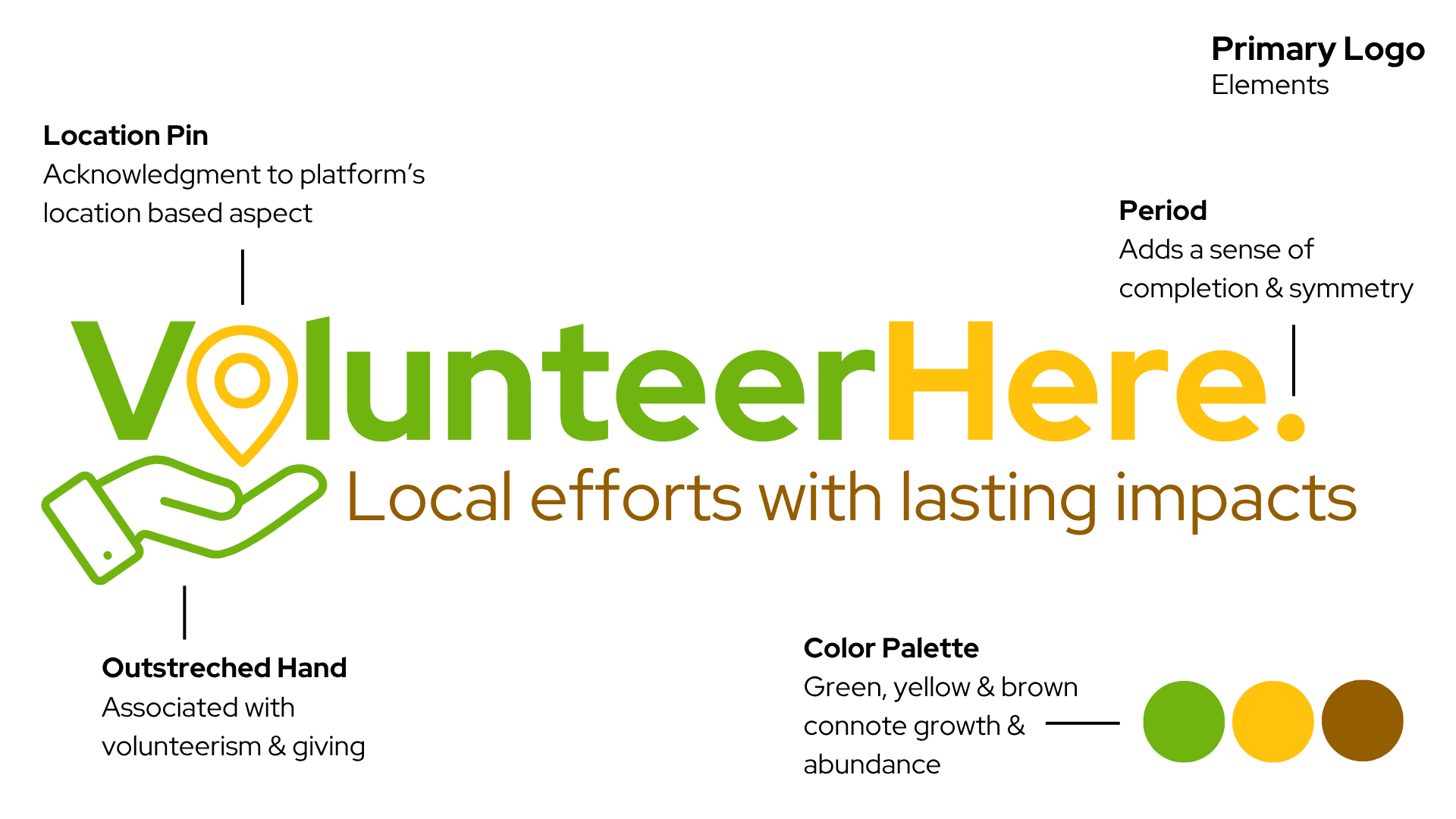
Logo guide.
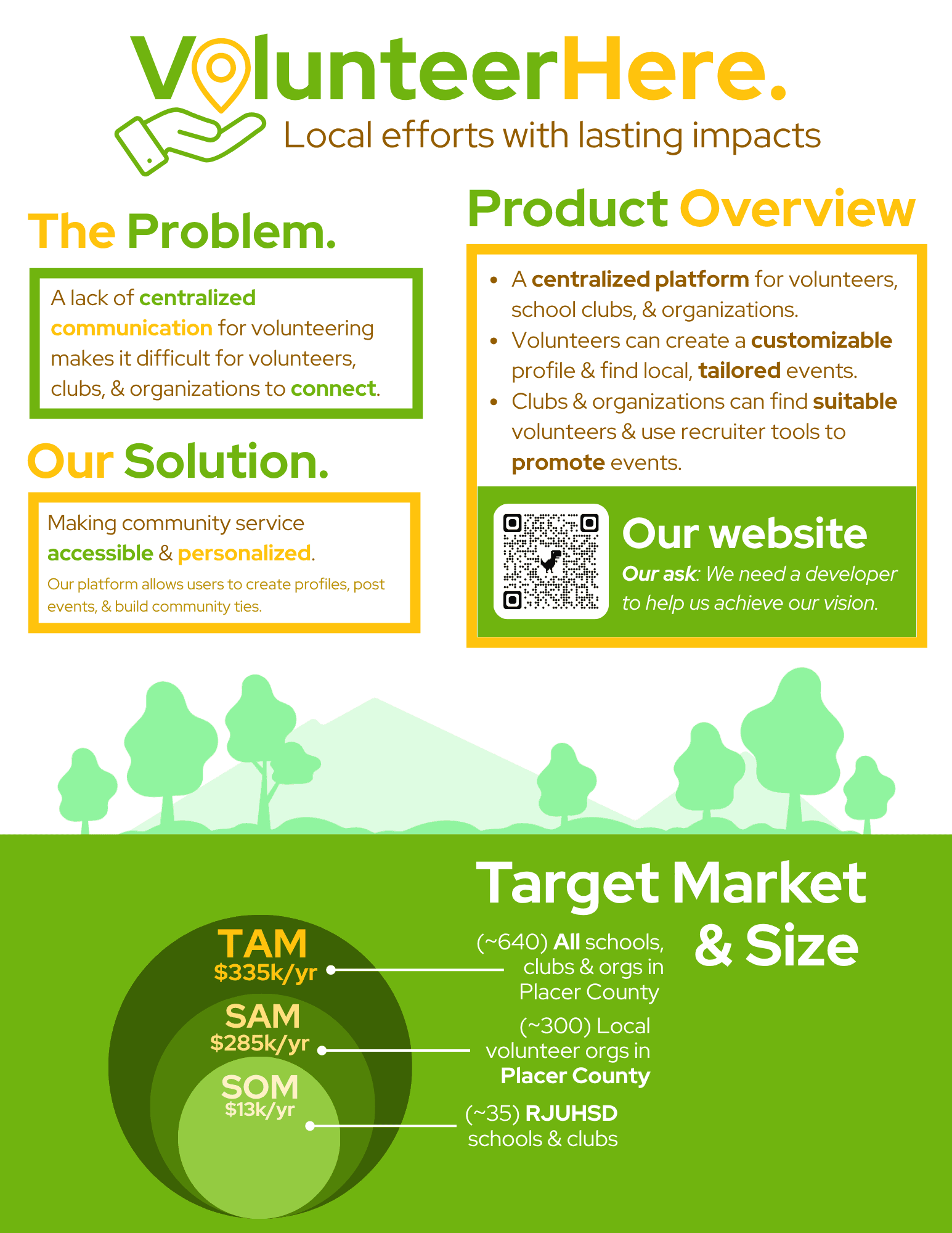
Front of tearsheet.
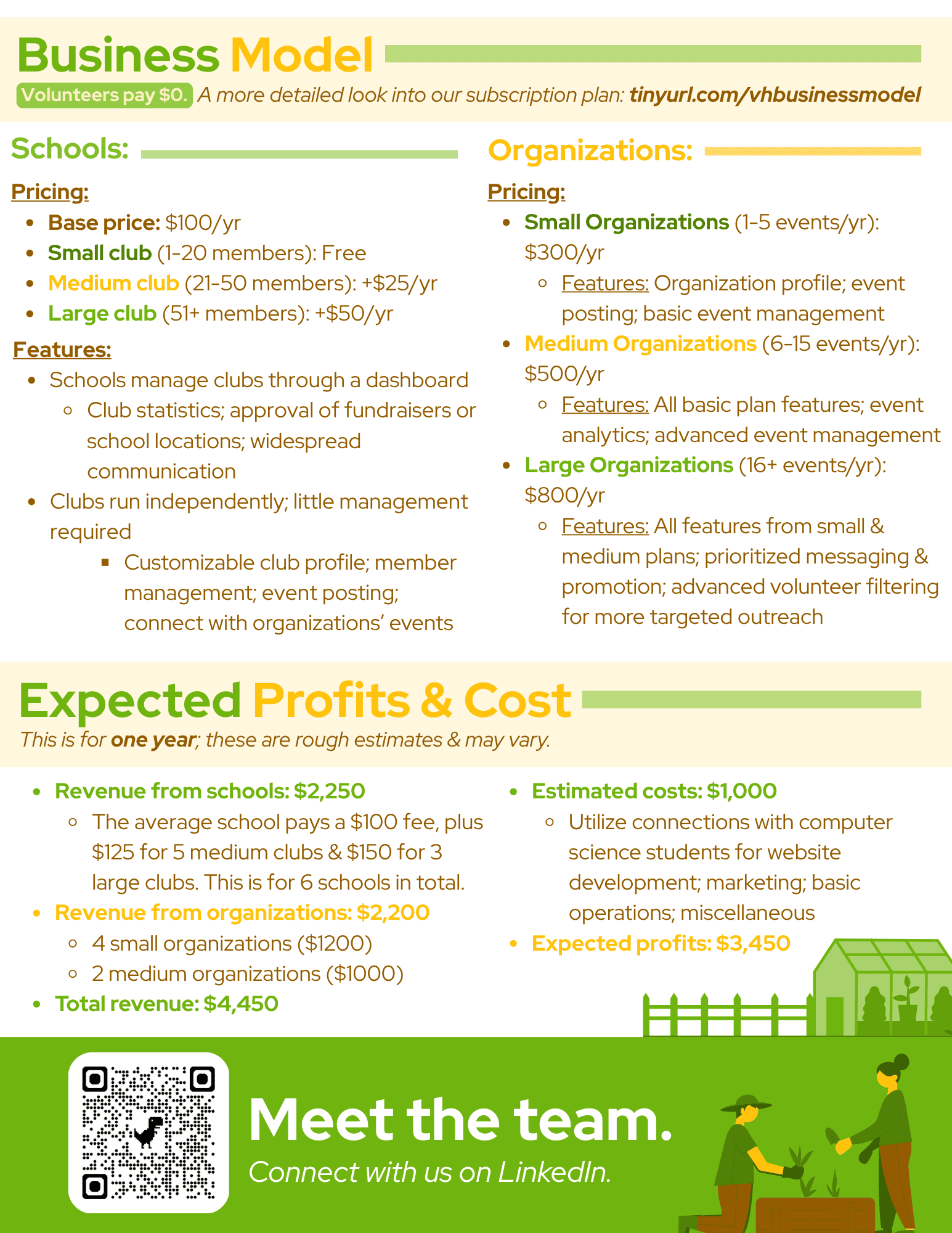
Back of tearsheet.
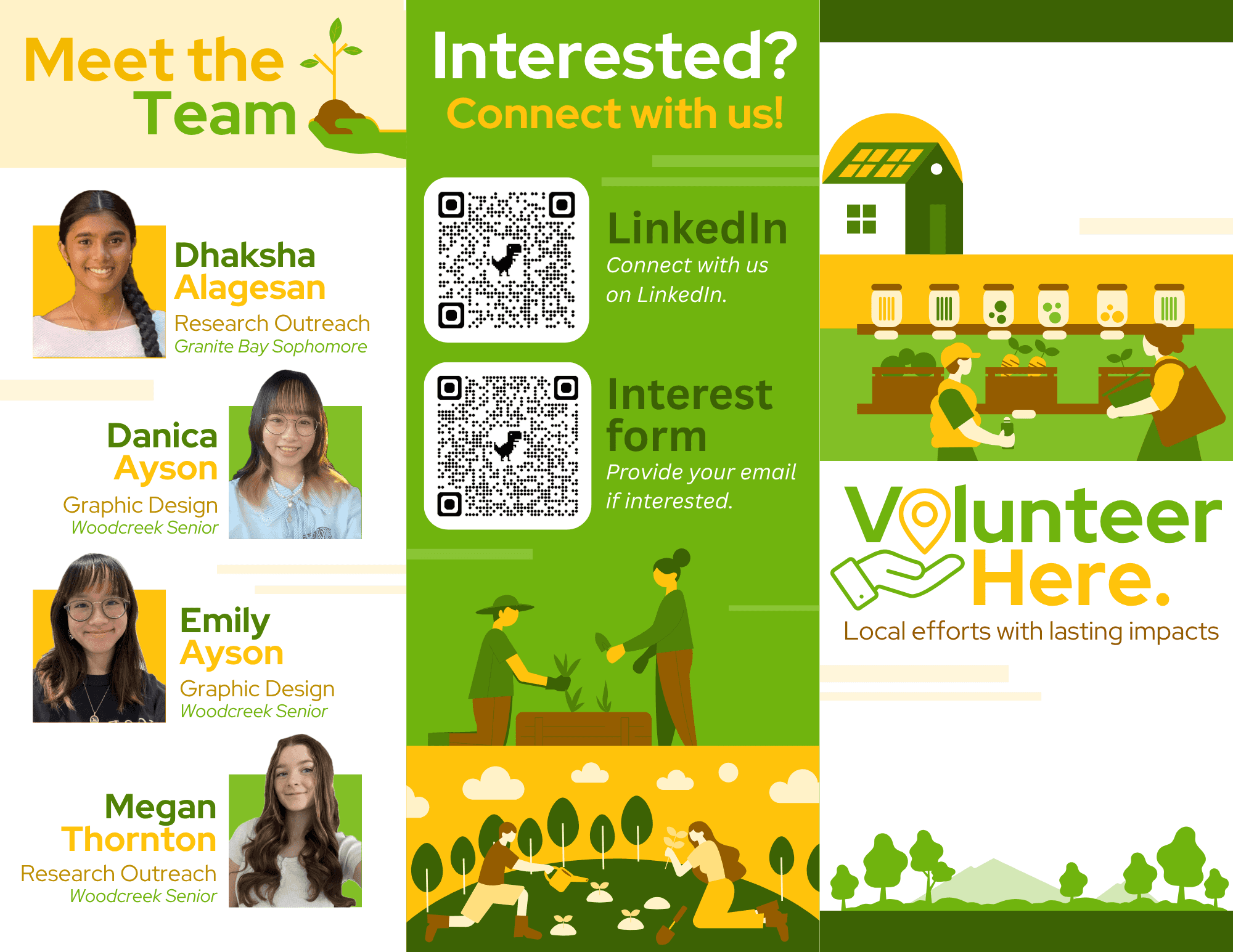
Front of brochure.
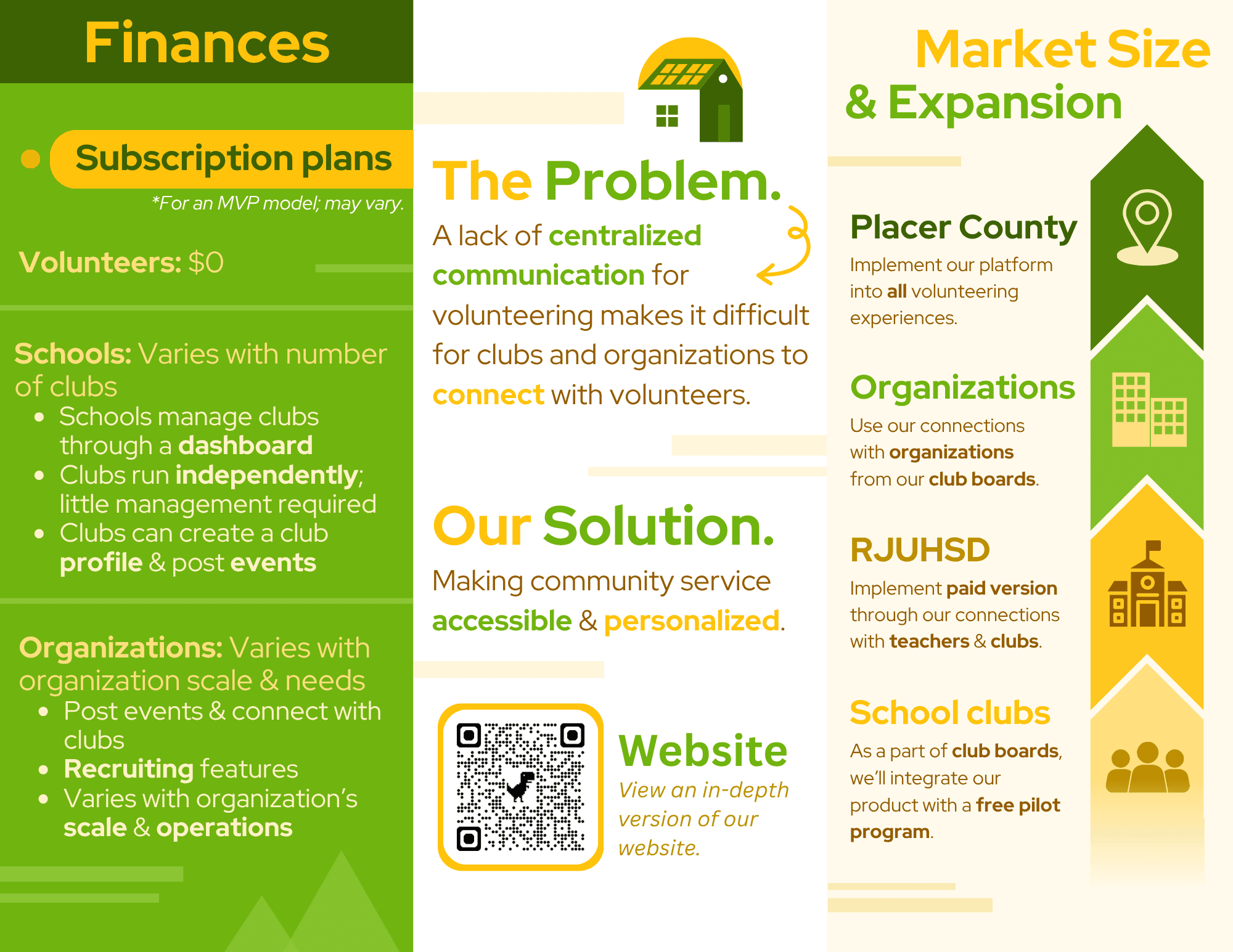
Inside of brochure.
FINAL SOLUTION
✦ Onboarding and profile
Introduces users to the platform through a clear landing page, and provides context to our mission.
Users can manage their personal profile, indicating their volunteer experience and current affiliations.
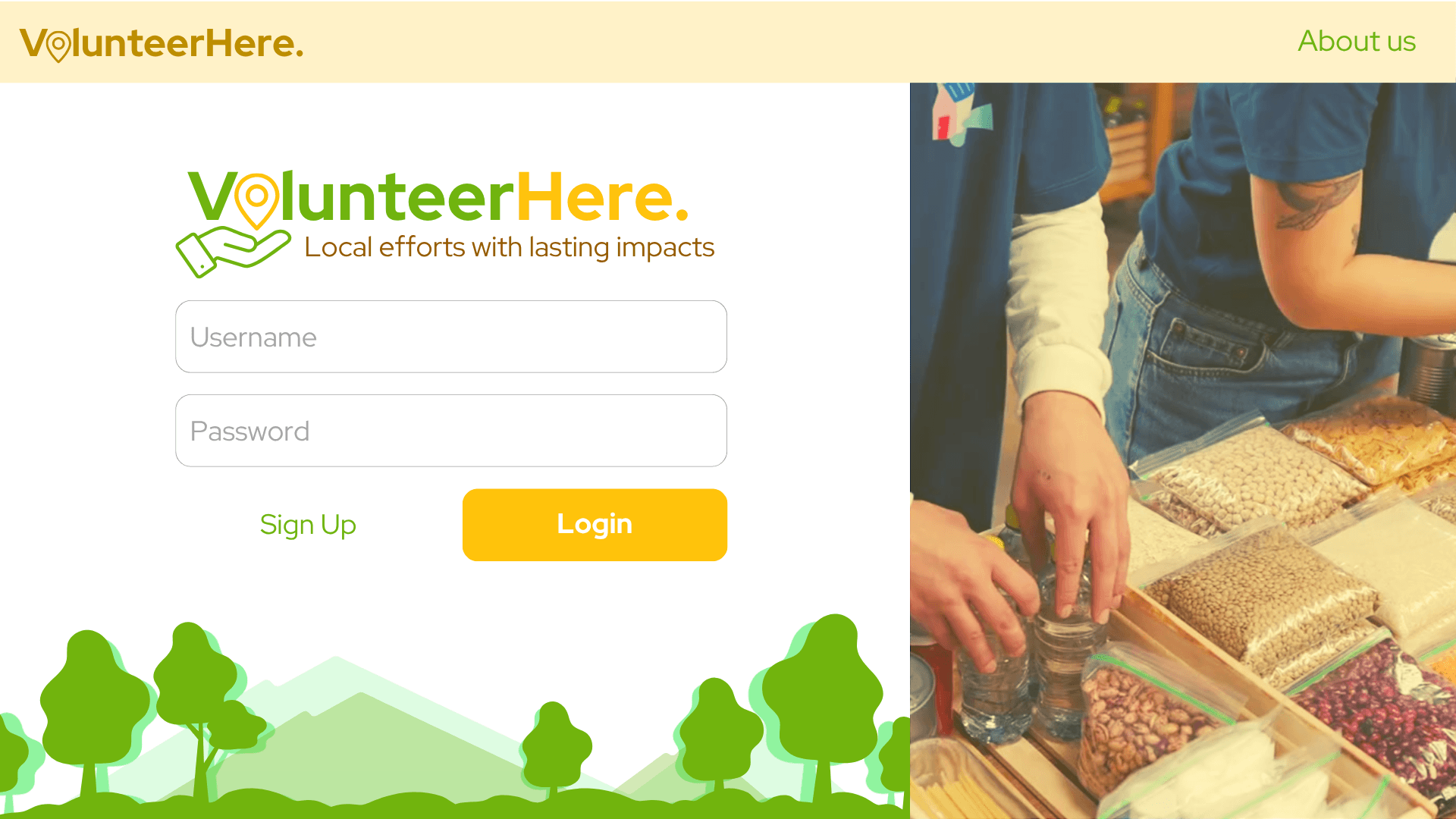
Login page.
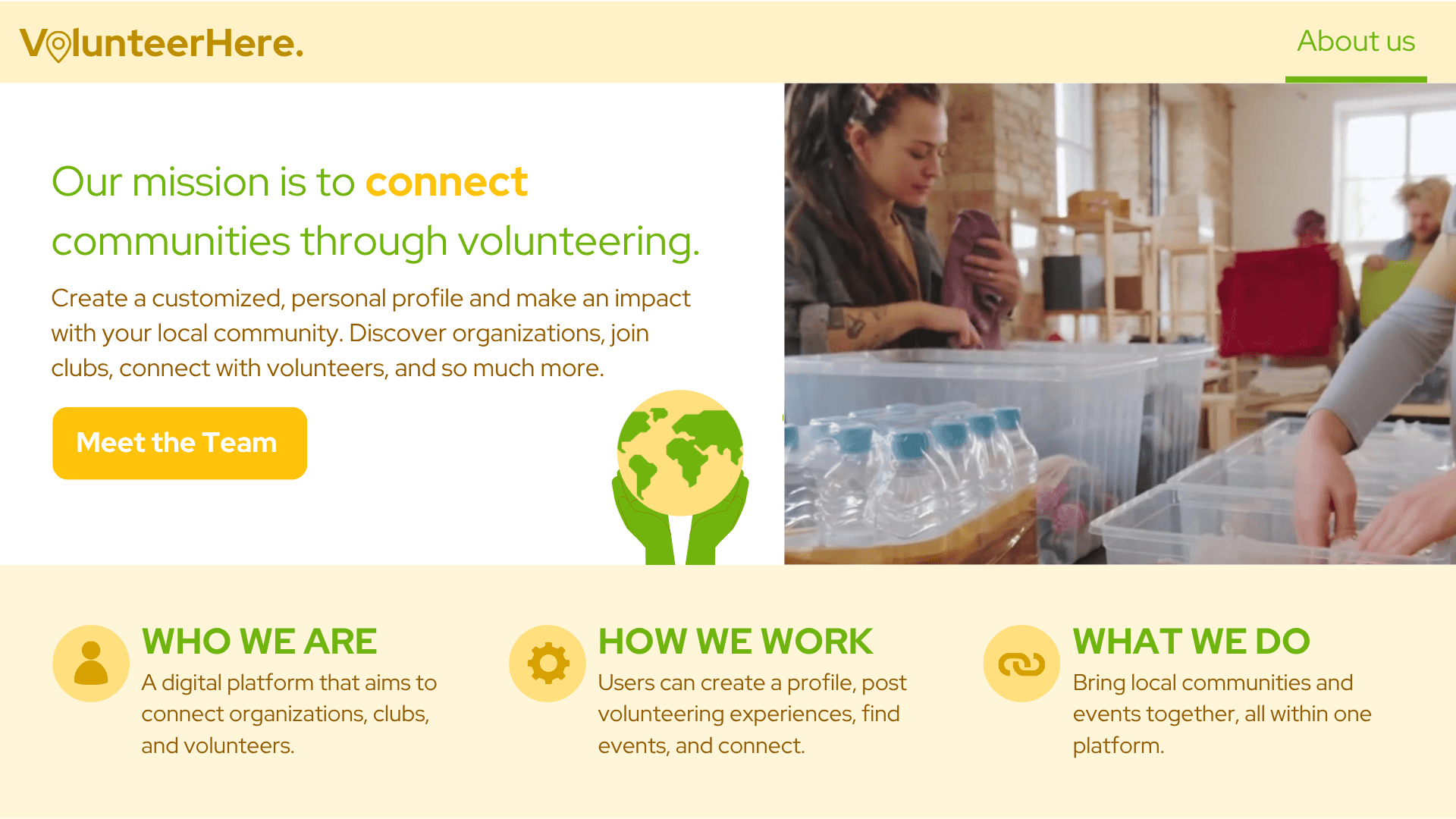
About us page.
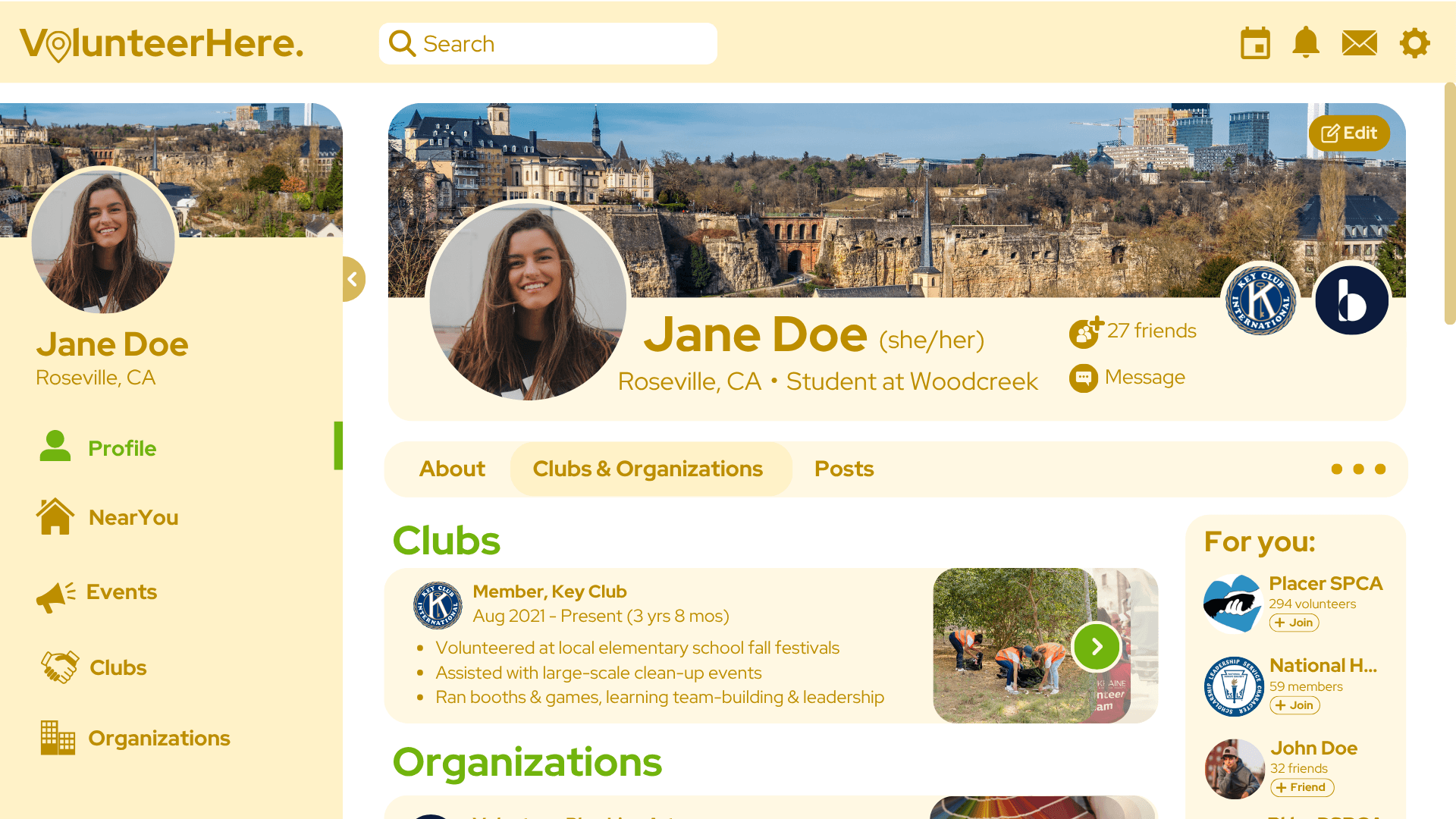
Profile page.
FINAL SOLUTION
✦ Personalized feed
Users can share their volunteering experiences, discover nearby opportunities, and find recommendations tailored to them.
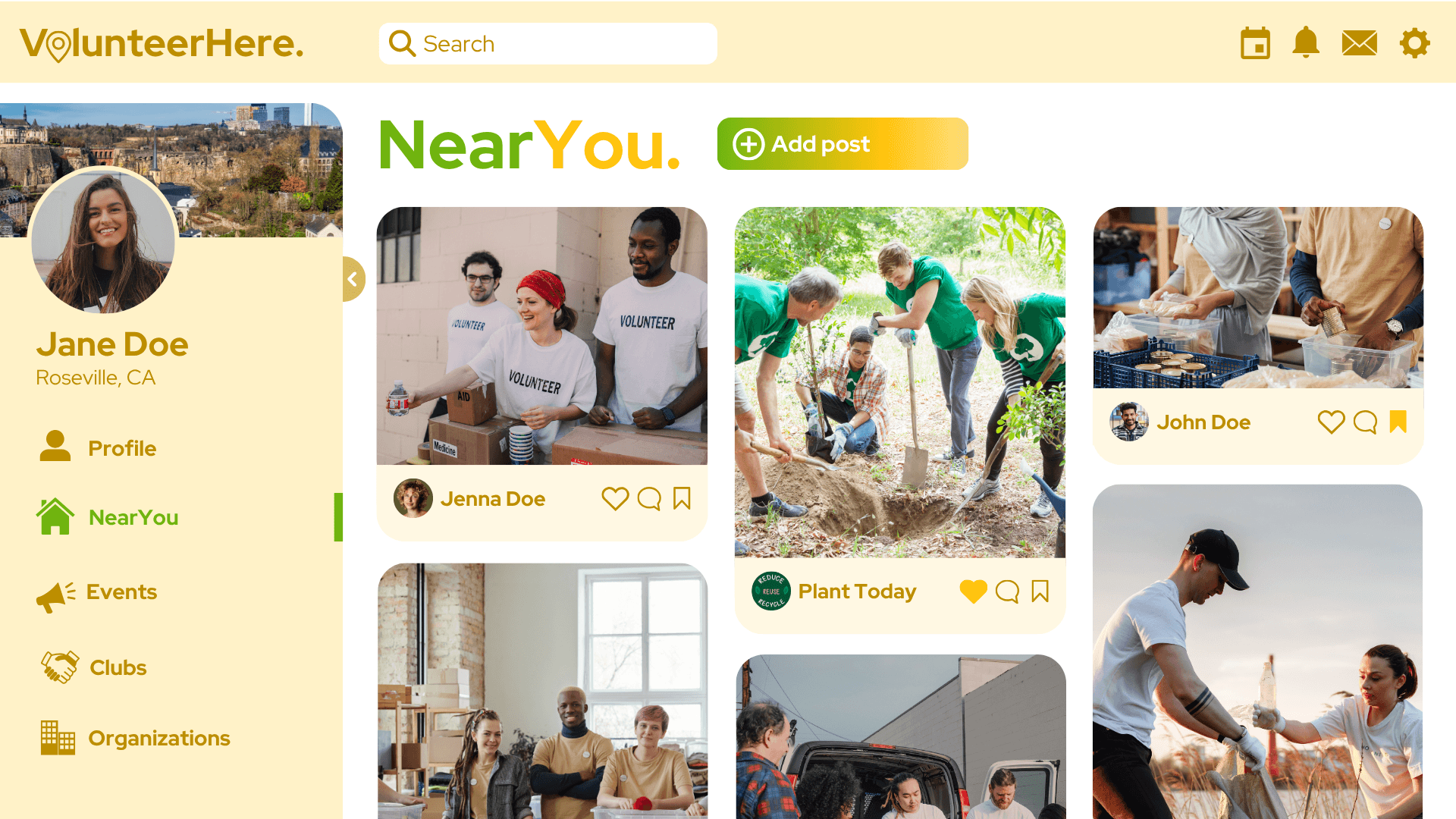
NearYou page.
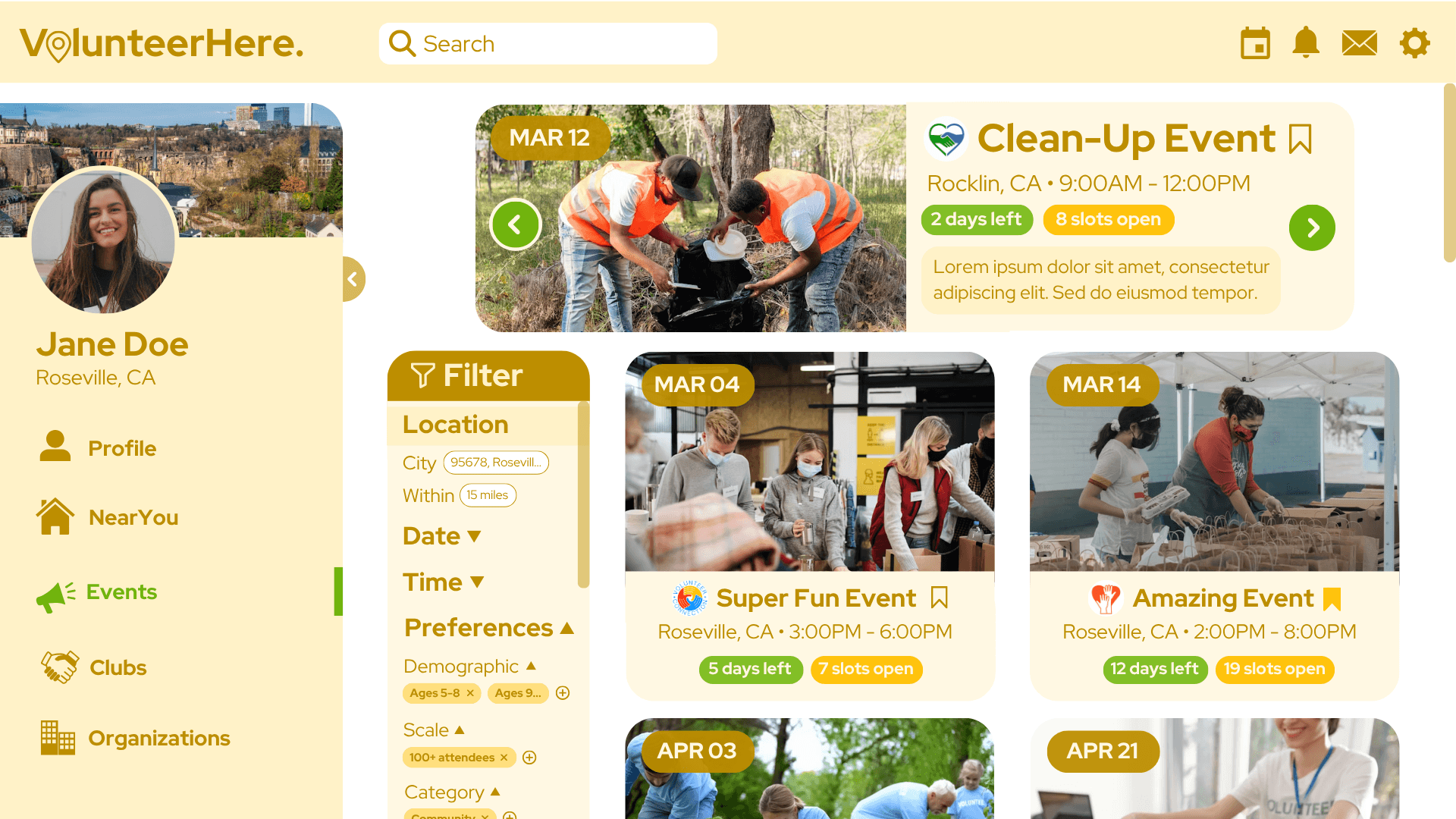
Events page.
FINAL SOLUTION
✦ Community connection
Users can connect with local clubs and organizations that engage with volunteerism.
Users can integrate their calendar for seamless reminders, and utilize messages for simplified communication.
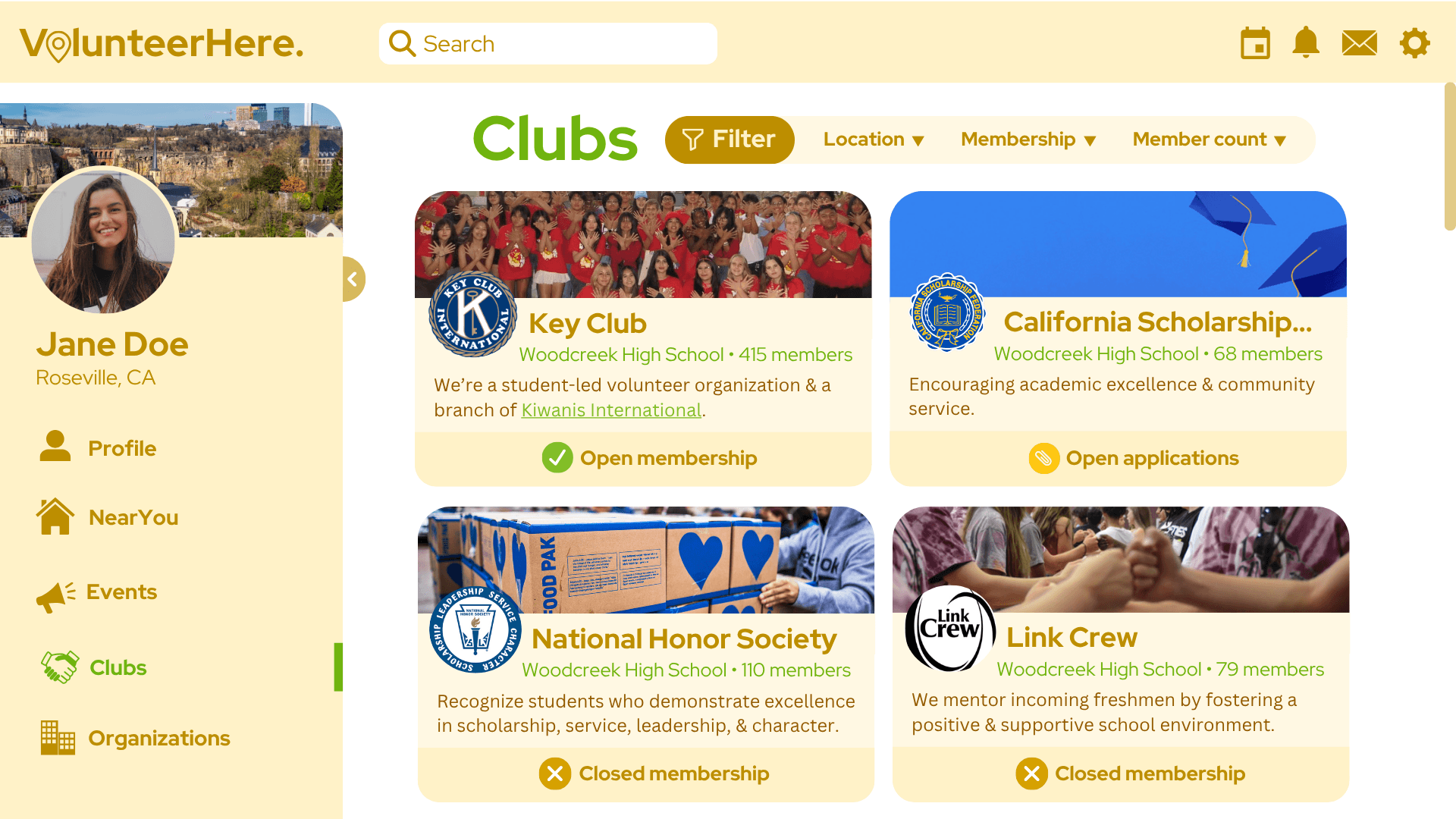
Clubs page.
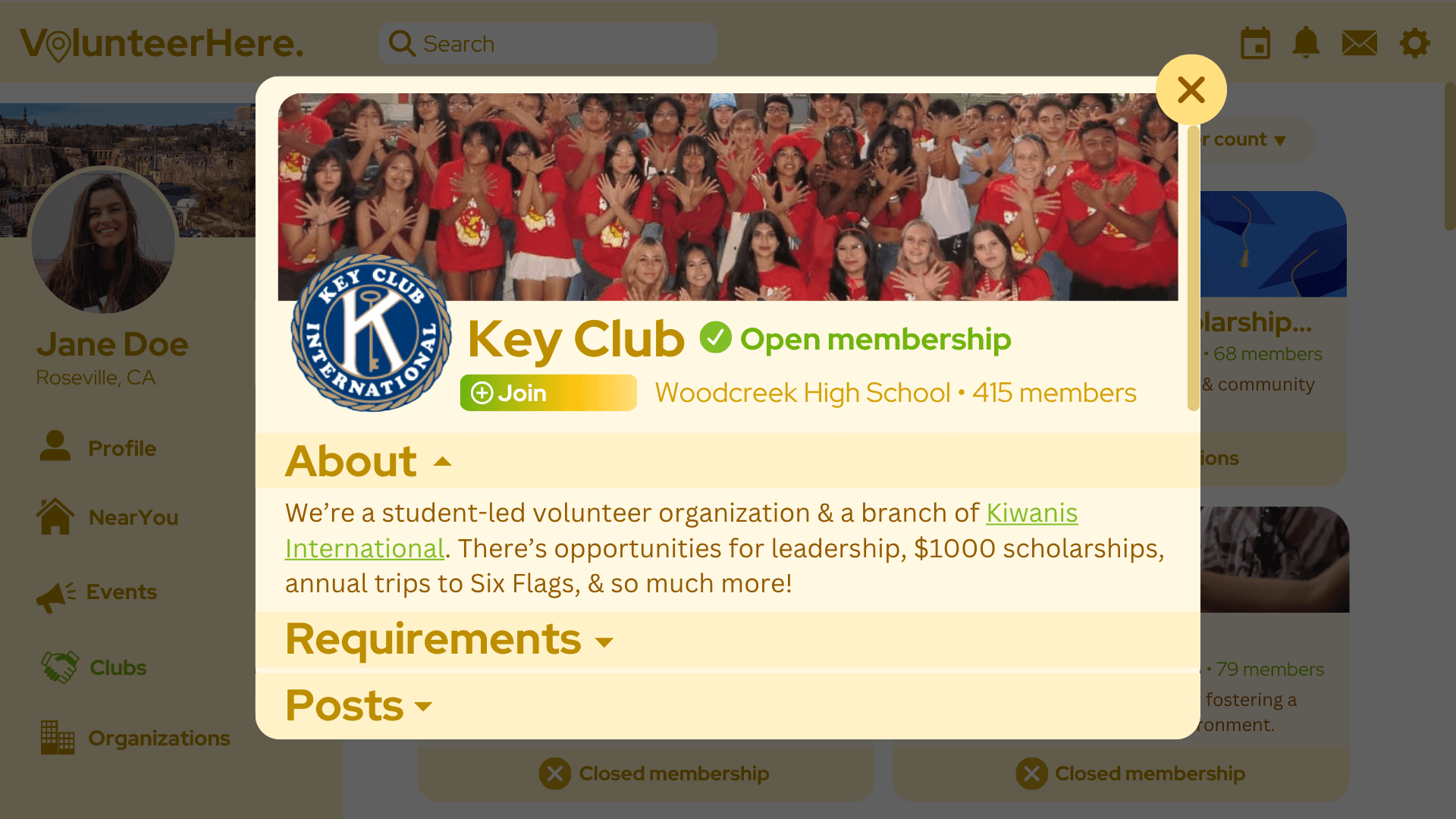
Clubs pop-up.
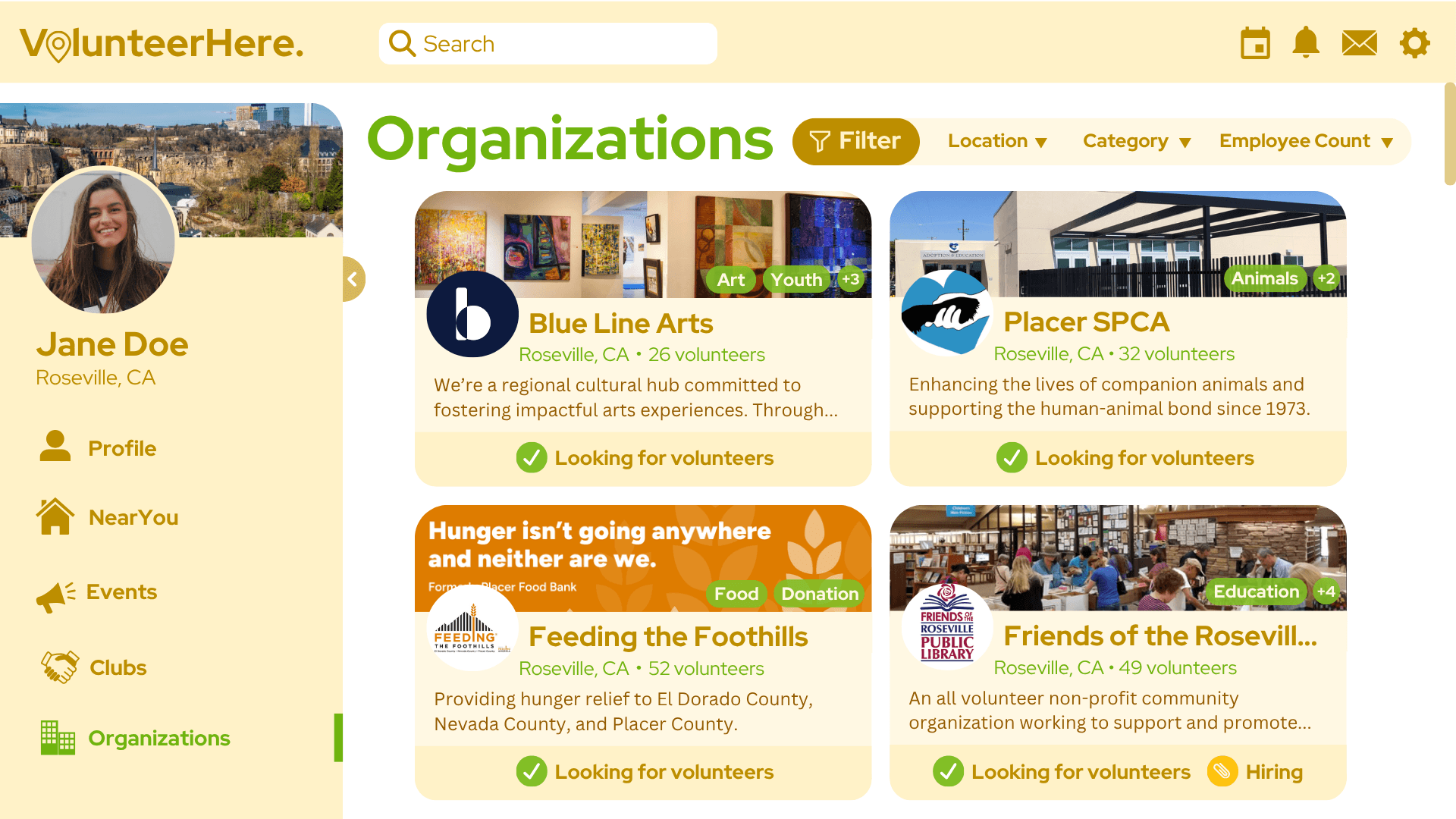
Organizations page.
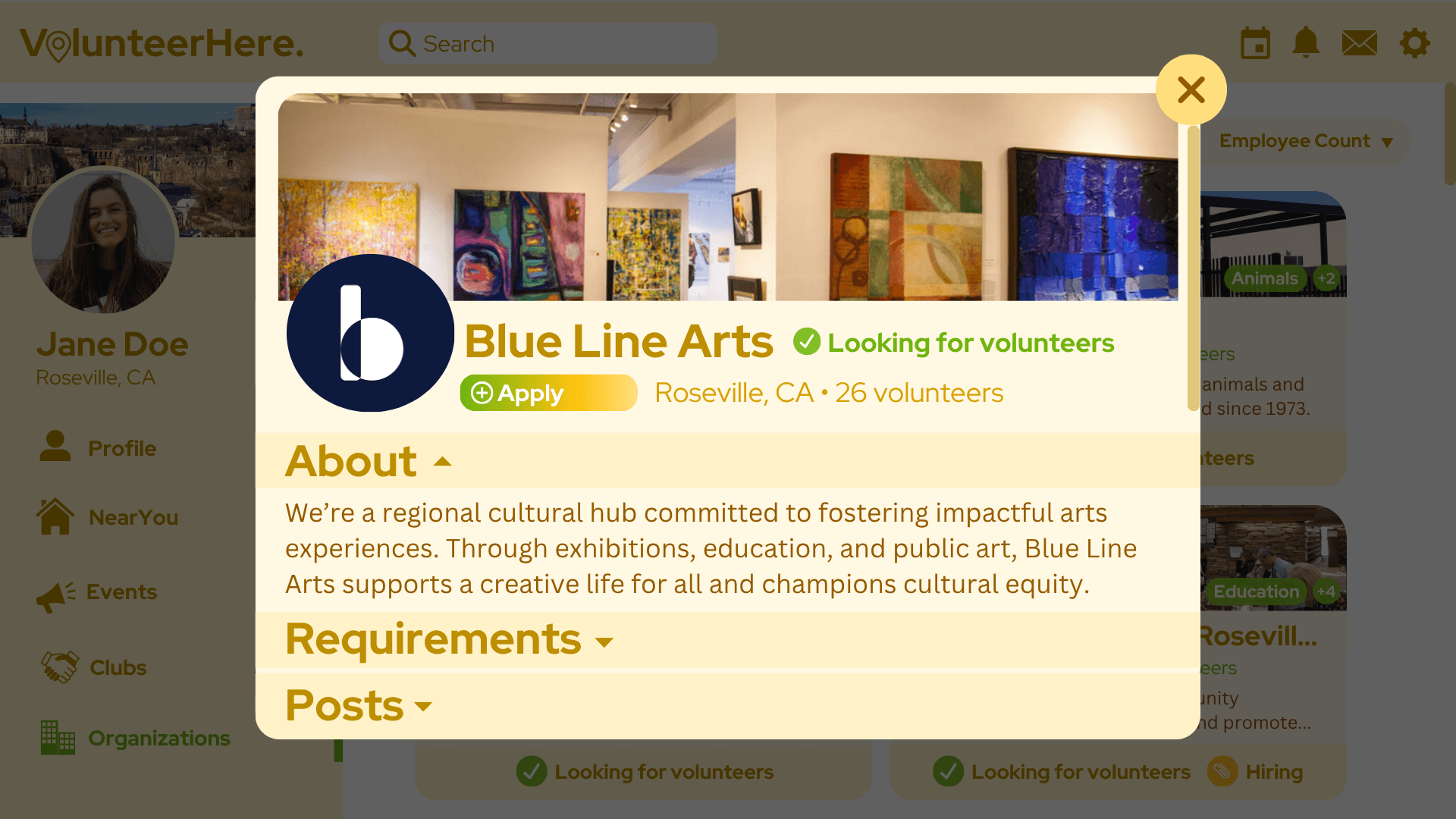
Organizations pop-up.
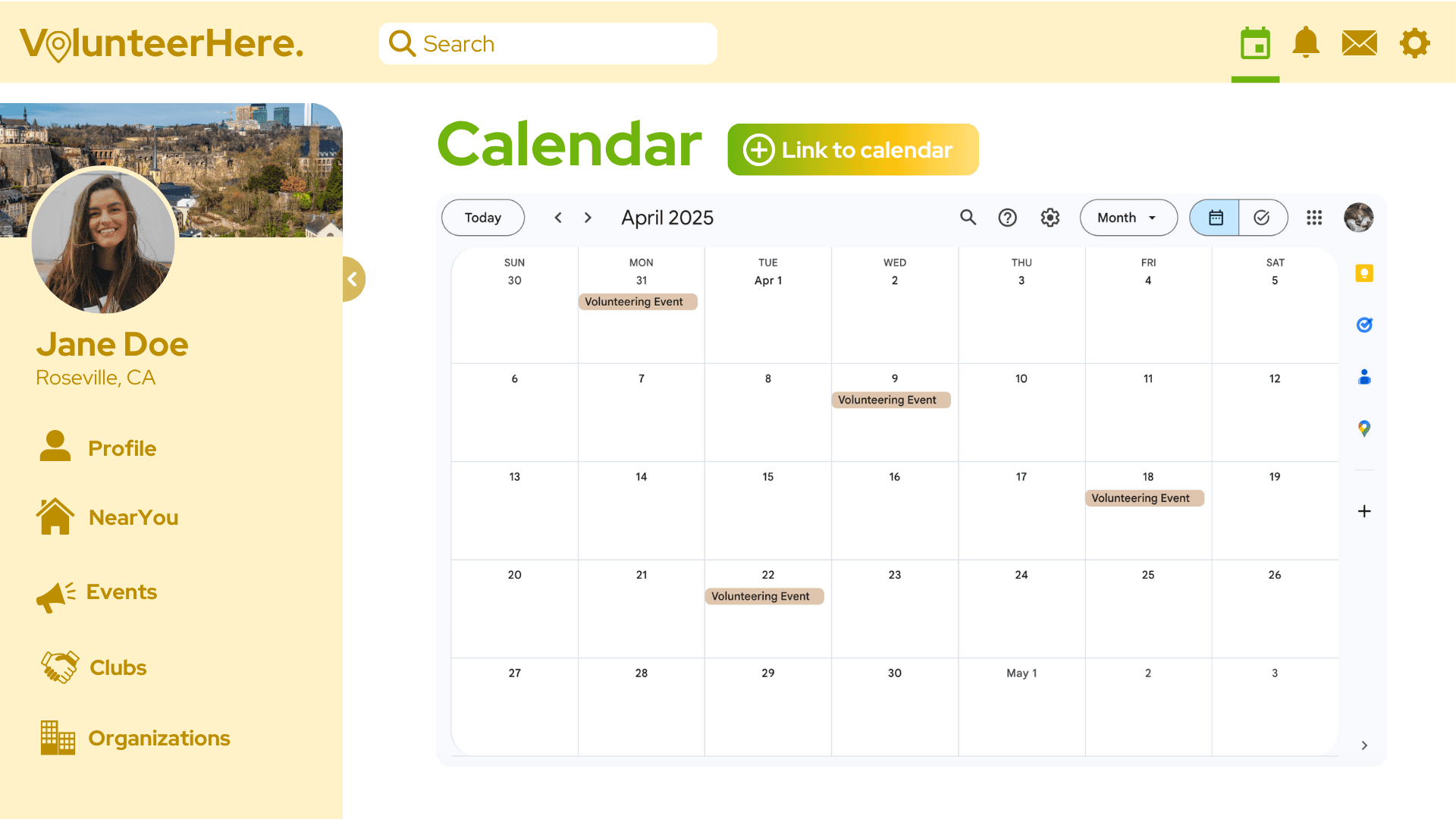
Calendar page.
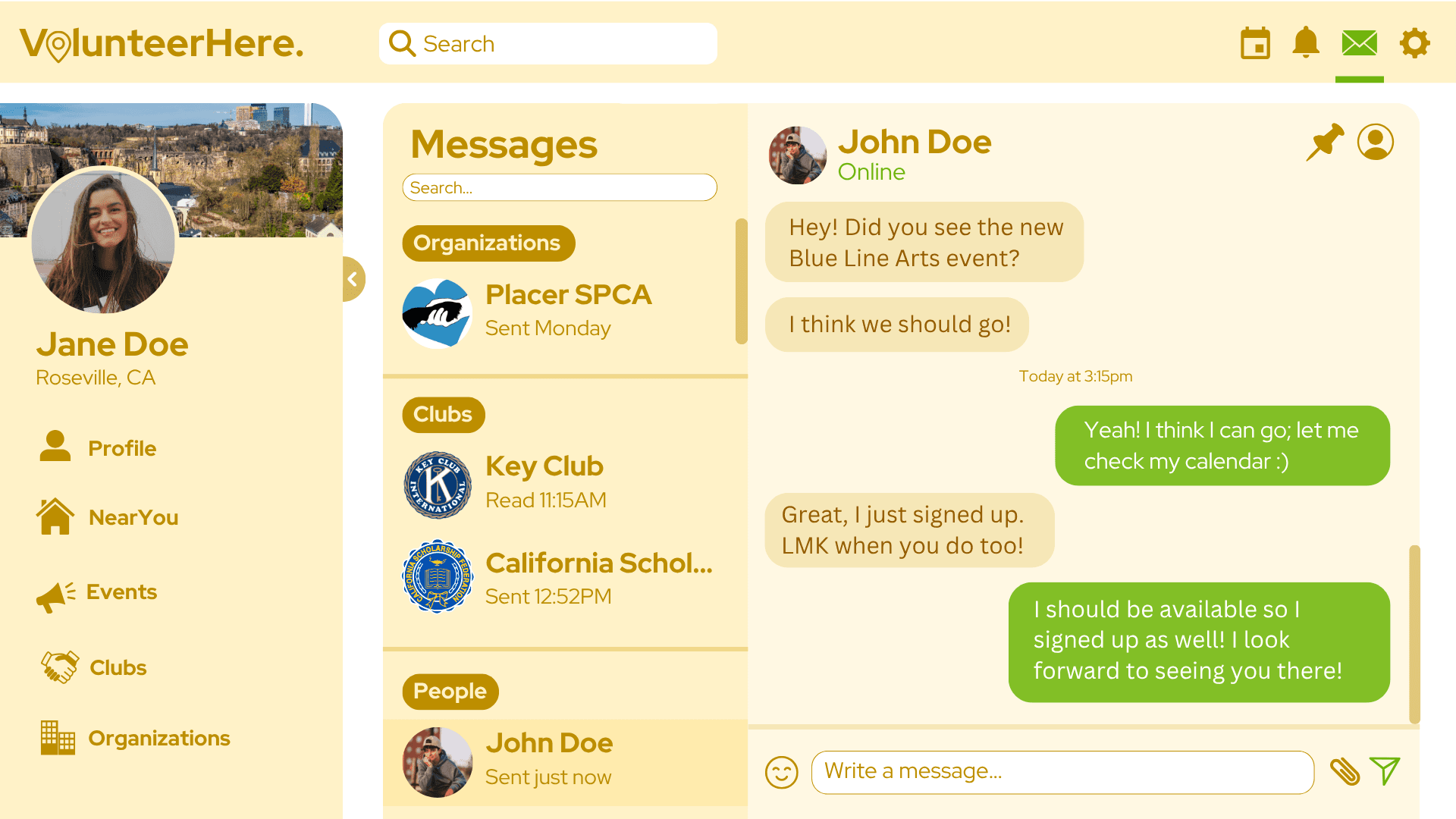
Messages page.
DEMO DAY
Showcasing the final product
Given the format of demo day, our biggest consideration was crafting a story within our presentation. Given the time constraints of just three minutes to deliver a pitch, we wanted to create something that was both memorable and concise.
Audience showcase
Each project has a designated table to display their product.
Audience members and judges browse the showing room and are encouraged to ask groups about the displayed project.
We created a trifold that embodied VolunteerHere's identity, with handouts to encourage engagement with passing audience members.
Three-minute pitch
Each project has three minutes to pitch their idea to a panel of judges.
We followed a narrative format, walking through a fictional student's experience navigating the website.
This storytelling aspect allowed members to fully immerse themselves with the website and how they might potentially interact with it.
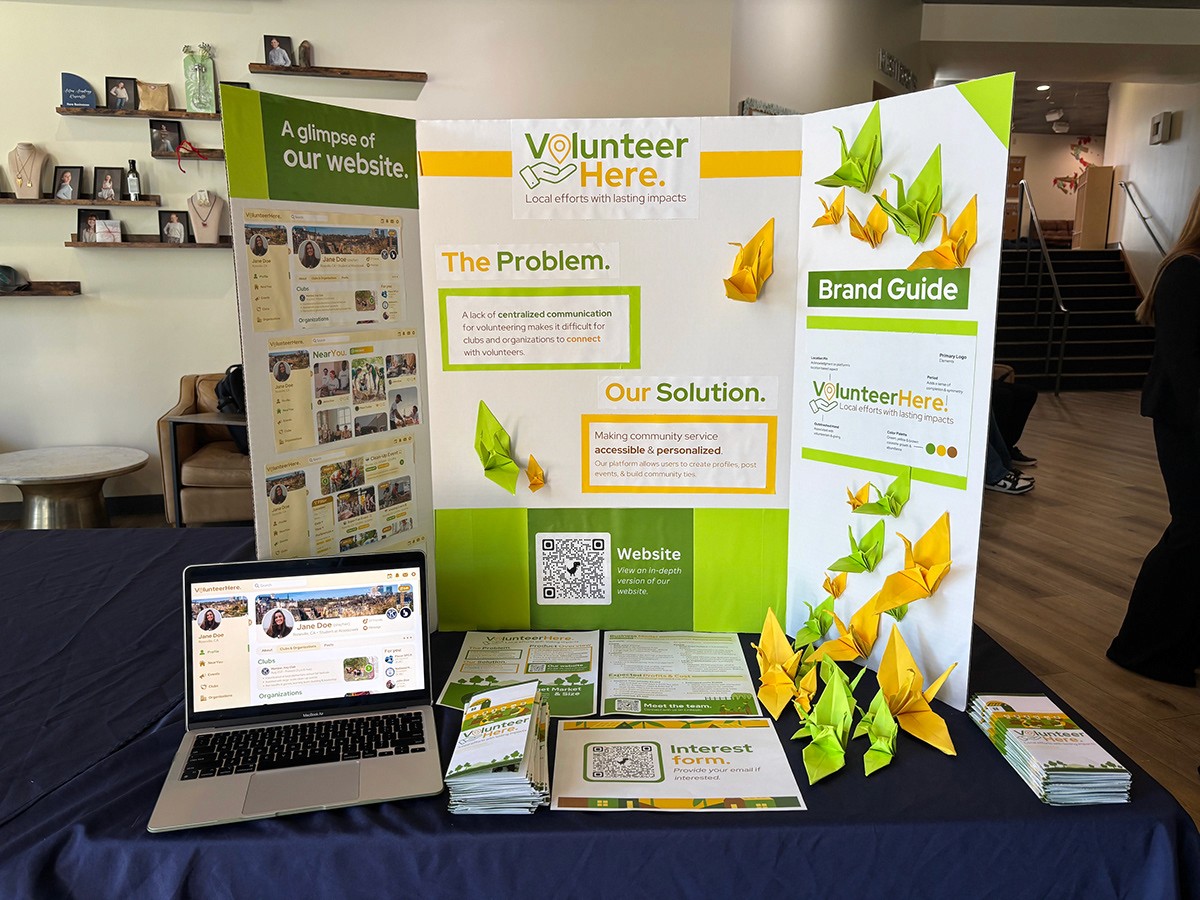
Trifold and table setup.
Final pitch slide deck.
OUTCOME
1st Place and the People's Choice Award
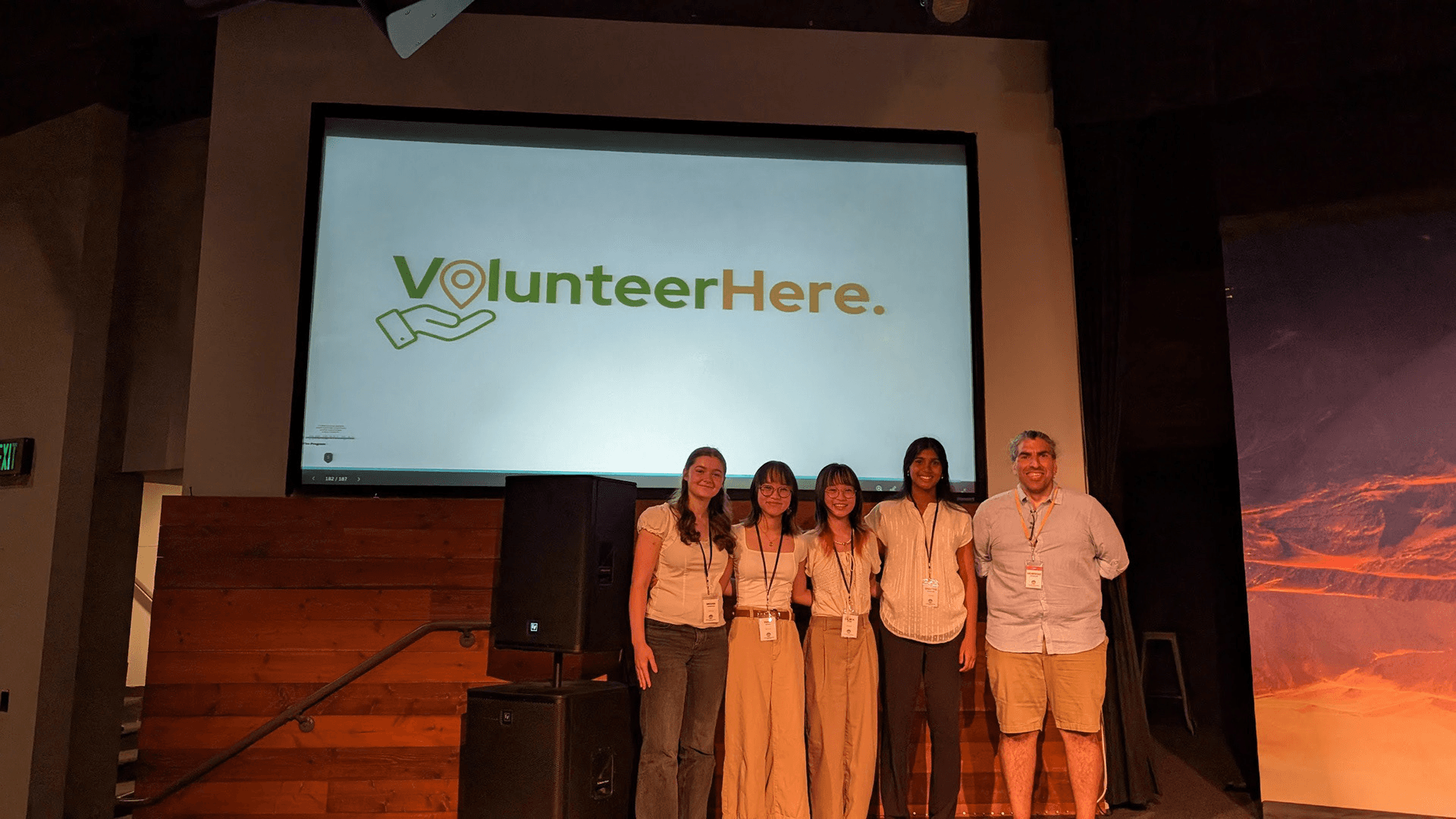
Ultimately, our team's efforts paid off—out of ten competing teams, we won both First Place and the People's Choice Award.
This was a truly rewarding experience, that gave me my first glimpse into the UI/UX realm, and validated the potential for our solution in the volunteering space.
REFLECTION
Key takeaways
This project was a huge effort, but it was gratifying to see our work come into fruition. Through this experience, I learned the potential Figma has in conceptualizing our website, and the importance of storytelling.
Utilize Figma as a key foundation.
Given that this was my first step into web design, I didn't know that Figma even existed—in the future, I plan on developing VolunteerHere into Figma, with a fully working prototype.
A compelling story can bring a product to life.
The biggest strength of our pitch was the story element—had we presented VolunteerHere from a more detached perspective, our solution may have not resonated as strongly with the judges. I believe that our narration of an actual user experiencing the website painted a strong picture of potential.
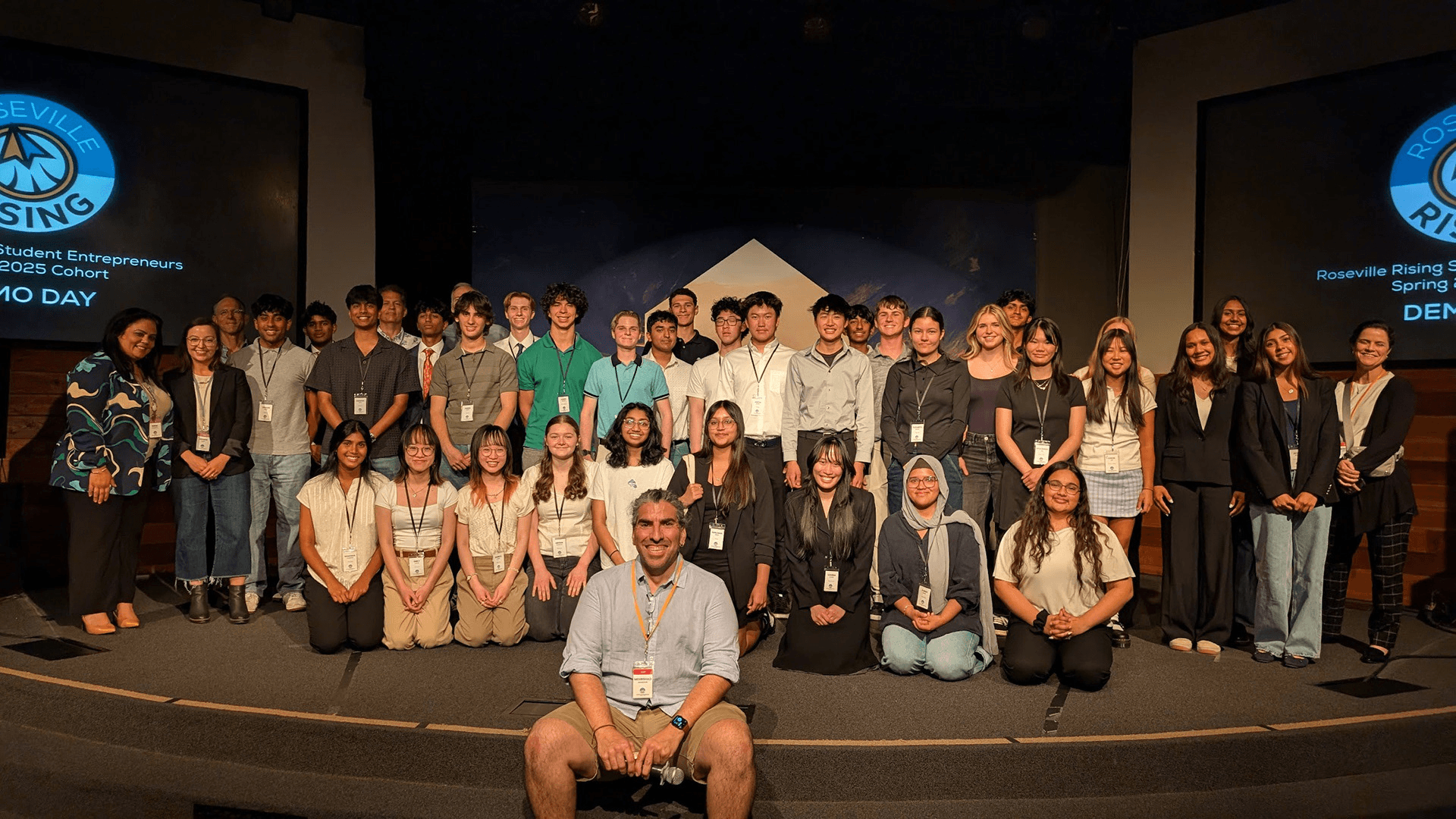
RRSE spring 2025 cohort!